
By mid-morning, Mirae University hums like a beehive that discovered caffeine and decided it deserved rights.
The campus is brighter than it has any business being in March—sunlight sliding across brick and glass, wind snapping the club banners like they’re trying to start their own revolution. Students flow between buildings in waves of backpacks and iced americanos, faces half-awake, half-determined. Somewhere a speaker is blasting a song I know but pretend I don’t, because it’s too early to feel perceived by a chorus.
I weave through sun and shade, past tables advertising clubs I’ll swear I’m interested in and then ghost politely. Someone in that big mascot head tries to hand me a flyer like it’s an oath. I accept it like a citizen doing taxes.
My first lecture dissolves into notes and yawns. The second smells like dry erase markers and ambition—like the professor rubbed “future success” into the whiteboard and expected it to stick. I take the right kind of notes, the kind that look responsible when you review them later, and I pretend I’m not still carrying the soft, impossible weight of last night’s dream in my ribs.
Because it was a dream.
I keep telling myself that like it’s a password that opens normal life again.
And it mostly works. Mostly.
Between classes, I find Geon-woo leaning against a railing outside the student center, the kind of casual that takes practice. He’s in a navy track jacket again, hands in his pockets, posture relaxed like he isn’t secretly made of competence. The wind tugs at his hair and he doesn’t bother fixing it. He looks like the kind of guy who would survive an apocalypse by sheer audacity and then apologize for making it look easy.
When he sees me, his face brightens like I’m something he expected and is still happy to find.
“Anna,” he says, and tosses me a mandarin from the convenience store downstairs.
I catch it with one hand like I meant to.
“For vitamin C and attention span,” he says.
“I have attention span,” I protest, already peeling.
Geon-woo’s eyes flick to the faint purplish shadows under mine. “Your attention span doesn’t look like it slept.”
“It did,” I say, slipping the peel into a neat spiral. “In… some way.”
“Like a broken video?”
“Like a phone battery at one percent,” I correct. “It turns on, it lies, it dies again.”
He laughs—warm, easy—and takes a slice from his own mandarin. “Did you take the medicine your mom sent?”
I hesitate. It’s a small hesitation, but Geon-woo has known me since I was small enough to think lying was something you did with your whole face, not just your words.
“I did,” I admit. “It helped.”
“You look… less haunted,” he says, and then makes a face like he regrets choosing that word.
I snort. “Don’t worry. I’m still haunted. Just in a cuter way.”
He offers me his cup of convenience-store coffee like a peace treaty. I take it, warmed by the plastic lid and the fact that he buys me the sweet kind without asking. He always remembers what I like as if my preferences are important history.
“What’s your next class?” he asks.
“French,” I say, wiggling my brows. “So I can order croissants with dignity.”
“You already order everything with dignity,” he says, squinting at me. “Except sleep. You order sleep like a person panicking at a drive-thru.”
“Hi,” I say, deadpan, in my best customer-service voice, “can I get eight hours of unconsciousness, no nightmares, light on the existential dread?”
Geon-woo laughs so hard his shoulders shake. He covers his mouth with his sleeve like he’s trying to be polite about it, but his eyes still crinkle, bright and unguarded.
“Exactly,” he says.
We start walking toward the language building. The air is cool, the kind that wakes your skin up even if your brain is still loading. We move close enough that our shoulders almost touch, like magnets that pretend they aren’t magnets.
He tells me about futsal tryouts, about how the captain is making everyone run extra laps because someone showed up late and the whole team paid for it. He’s annoyed but also amused, like he enjoys suffering as long as it comes with a story.
I tell him I might try the climbing wall if he stops looking at me like I’ll fall to my death.
“You won’t fall,” he says easily. “I’ll belay you.”
“I don’t know what that means.”
“It means I won’t let you hit the floor.”
The way he says it—simple, certain—snags at something soft inside me. Not romantic, not something I’m ready to name. Just… that familiar safety. That quiet promise that if I slip, he’ll be there with his hands already up. I guess we know each other for a long time already.
I make a face to hide it. “Fine. But if I start screaming, you’re not allowed to laugh.”
“I would never,” he says, already grinning.
We reach the language building. The halls smell like floor cleaner and warm printer paper. Students lean against walls practicing pronunciations under their breath—tiny performances in a world that grades your mouth.
Geon-woo doesn’t come inside. He lingers at the door with his hands in his pockets, watching me like he’s memorizing the shape of my day.
“You’ll be okay?” he asks, softer.
“I’ll survive conjugations,” I say.
“That’s not what I meant.”
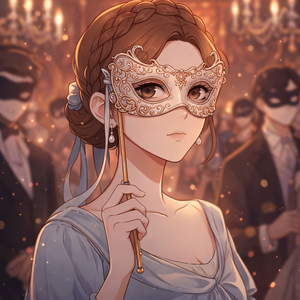
I blink at him, caught. For a second, I almost tell him about the château. About the torchlight, the silk, the voice that called me a name that isn’t mine and somehow still landed like it belonged there. It feels too intimate—like letting someone touch the inside of my ribs.
So I shrug, light.
“I’m good,” I lie gently. “Just tired.”
Geon-woo’s gaze holds mine for one long second, like he doesn’t believe me but also doesn’t want to force me into honesty.
“Text me if you feel weird,” he says.
“Do you want updates from the bathroom too? Weird is my baseline.” I reply laughing.
“Different kind of weird, you know.”
“Okay, okay. Stop worrying so much, Dad!” I say, and step backward into the building.
He flips me off in the politest way possible and walks away, smiling.
French class passes in a blur of vowels and shame. The professor is kind, the type who says your mistakes are “charming” like you’re a toddler with a lisp, and I hate how grateful I am for it.
My mouth remembers French a little too well. Sometimes the words sit too easily on my tongue, like they’ve been waiting. I guess it’s because my mom spoke to me in French when I was little, and because I grew up hearing it like background music.
After class, I meet the others on the quad. We sprawl on the grass like a catalog ad for youth. Soo-ah adjusts her skirt so the sun catches it. Hye-jin annotates margins the size of a fingernail. Min-jun tries on Daniel’s sunglasses and declares himself international.
“You’re domestically chaotic,” I inform him.
“True,” Min-jun says, unbothered. “But in a global way.”
Daniel laughs, a little surprised at himself. His Korean is improving in tiny, brave increments. He says things like “Are you okay?” with the careful pride of someone holding a fragile glass.
“This is normal,” I announce suddenly, and everyone looks at me.
Soo-ah tilts her head. “We know.”
“No,” I insist, gesturing at the campus behind us. “This. The grass. The sun. Min-jun being a menace. Hye-jin pretending she doesn’t enjoy us. It’s… normal.”
Geon-woo, sitting cross-legged beside me, studies my face. “Did you think it wouldn’t be?”
I open my mouth, then close it.
“It’s just nice,” I say instead, picking at the grass. “First week vibes.”
Soo-ah hums. “You’re sentimental. Is this the medicine?”
“Maybe,” I say. “Or maybe I’m evolving.”
Min-jun gasps. “Into what?”
“A person who finally sleeps.”
The table laughs—because it’s ridiculous, because it’s a joke, because it’s safe. For a few hours, it’s all campus noise and dumb jokes and the familiar ache of pretending I’m fine. And when I laugh with them, it almost works.








Comments (2)
See all