
Swifter than Amalia had ever hoped, the meeting came.
That morning, she asked Jutte to please bring a pot of whichever Euphemie preferred between coffee and tea and chocolate to her study, and to bring pastries, whichever were to Euphemie’s liking.
“Don’t panic so much,” Jutte told her, “the way you speak, you would think Euphemie is a potential suitor. Discussing a contract marriage, are you?”
For some reason, this statement turned Amalia’s cheeks a bright red. Unwilling to consider the meaning of such a thing, Amalia barreled forward in preparation for the meeting, drawing up the necessary documents, preparing in her mind exactly what she would say. Then there was a soft knock on the door and Euphemie descended into the room not unlike a fairy descended on a flower, and Amalia began to panic.
“Lady Euphemie...” she began.
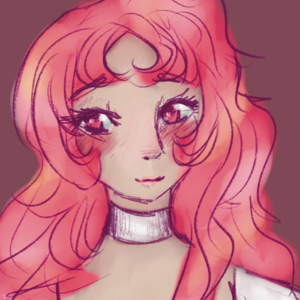
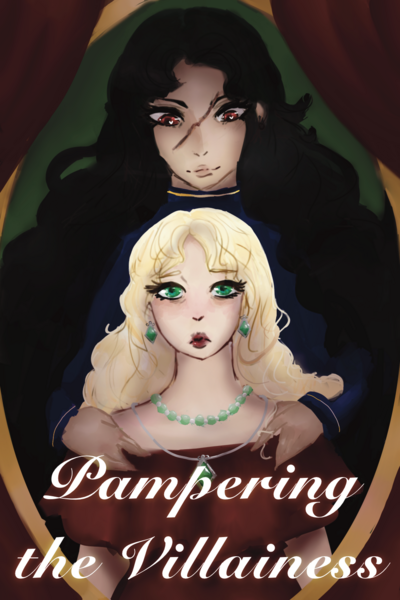
Euphemie wore the simple garment she had been given with all the grace of a queen. Her lips were a soft pink, her cheeks rosy. Not a curl of her hair was out of place. More noble than the nobility themselves, she drifted across the room and settled opposite Amalia at her deck.
Euphemie reached for the pot Jutte had brought in. Chocolate poured from its spout into her and Amalia’s cups; a most elegant choice. But why was Euphemie serving her? The teapot was surely heavy. Amalia would have to be faster next time.
“Who in this room is the lady?” Euphemie asked.
Amalia realized her mistake. “My apologies. You have the countenance of one.”
“No matter. What is it you would like to discuss?” Euphemie asked.
Amalia sighed, steeling herself. “It’s on the matter of your stay here.”
Euphemie blinked, slow and methodical. “Ah.”
“Were you aware during your execution?”
“Of course,” Euphemie sniffed.
“Then let me assure you once more that I mean you no harm.” Amalia swallowed, pushing away her apprehension. “I promise that you will face no painful punishment here.”
Euphemie was only slightly unable to hide the trembling of her fingers as she began to lift her teacup. “Is that so?”
“Yes,” said Amalia. Then she added, feeling frantic.. “Of course, I have no intention of seeing such things through. As long as you are in my manor you are under my care.”
“I see,” said Euphemie again. She sipped her chocolate then, and the cup covered her face. Amalia wondered at what her reaction to this news might be, and yet could not stop herself from admiring the strategy of such a move.
War, some scholar had once observed, was the undertaking of men, but tea was the battlefield of women, and far greater in its damage. Amalia, had privately thought this a rather stupid observation; generally, people did not die at tea parties. However, from the third tea party after her debut she had stopped attending a single one. A woman who was kind might put on a lovely event, but a woman who was cruel would utterly destroy you. Amalia, with her broad shoulders and untamable hair, had rather stood out at these occasions. It had not gone well.
It occurred to Amalia, watching Euphemie put her cup down, her expression carefully schooled, that she was sitting across from a master of these events. No matter how much Amalia could perceive Euphemie’s performance, she could not ascertain Euphemie’s true feeling, either.
“Then I am a mere guest?” Euphemie asked. Her wide-open eyes, dark as the underside of a glacier, her brows smooth, as though the news were nothing more than a small annoyance.
Amalia swallowed. “Yes. Though if Lady Margaret or my brother came by, we might keep you from sight or come up with some task for you to do.”
“You cannot turn them away at the gate?” Euphemie hummed.
“It would be difficult,” said Amalia. “But please, do not fear. We rarely get any visitors. Mondlicht is too remote.”
“I heard from Elizabeth it was a kingdom once.”
Amalia took a moment to drink her own chocolate. She nearly choked on its thickness. “It was. But that was long ago. My family swore fealty to the emperor, and were left in charge.”
“What an intriguing history,” commented Euphemie. “One must wonder how Mondlicht came to grow so small. But what do you think of the emperor now? And the crown prince?”
Here was a trap. Amalia tried desperately to remember what Euphemie’s feelings had been for the emperor and Leopold. Leopold’s father had invaded her kingdom, but Leopold had not participated in the invasion. And Leopold had saved her before; this was a man Euphemie was willing to kill for. Amalia ought not to speak so ill of him. Yet she could not bring herself to praise them, either.
“My family has known the Sonnenberg’s for generations,” she began. “Fifty years after Mondlicht had been conquered, my ancestor Erdem and the youngest prince, Artur, became very dear friends. He was never to inherit the throne, so he settled in Mondlicht. Our families have been... close, ever since. And as a member of the aristocracy, my family has sworn our fealty to the emperor.”
“And to his sons, I imagine?” asked Euphemie.
“And them, yes,” said Amalia.
Euphemie looked at her, eyes wide and dark and green. Then a wide smile spread across her sweet face. And this one, Amalia could not perceive the truth of. “How wonderful! Prince Leopold has always been a friend to me. He saw in me a diamond trapped in stone, which ought to have been set in silver.”
Amalia thought Prince Leopold rather a pig, but if Euphemie liked him, who was she to ruin her fun? He was, not to mention, a bit of a second male lead to Margaret, so Amalia supposed he must be attractive. Or something. There had to be some reason Euphemie was drawn to him. Some reason he was meant to be appealing. The man had thrown her to the wolves.
Whatever the case, Amalia forced herself to smile. “You must care about him deeply then.”
“I do,” confirmed Euphemie, sipping her chocolate once more. She placed her empty cup upon the table, and Amalia refilled it, quick as she could. “Thank you.”
“It is my pleasure,” Amalia hummed. “Do you have any questions about your stay here?”
“None,” Euphemie said, face curled in a sweet smile. “This seems a lovely place, and you a benevolent host. I am most grateful for your care.”
Amalia blinked. This seemed a little too easy. “I hope you do not mind, but it will be difficult for you to leave Mondlicht. You will be outside my ability to protect you. But I promise you will want for nothing while you are here.”
“Will Leopold be stopping by?” Euphemie asked. “Since your families are such good friends?”
“Mondlicht is a little remote, so I'm afraid it's unlikely.”
Amalia prepared herself for disappointment, but was uncertain if the neutrality of Euphemie’s next expression reflected any.
“That is to be expected, I suppose,” she stated instead. “Then will I see you often?” She looked up at Amalia, her eyes big and green.
“I do live here,” said Amalia, feeling stupid. Another reason she used to fail so hard at tea parties: all the pretty girls had left her tongue-tied. “Though my duties may take me away.”
“Then I shall endeavor to be a good guest,” said Euphemie. And then she stared at Amalia, as though expecting something. Amalia blinked; was it that she wanted more chocolate? Her cup remained full. It must be that Amalia was supposed to say something.
“Thank you,” she said, frowning.
“If that is all,” Euphemie replied, “might I be excused for a walk in the garden? It was so lovely.”
“Oh,” Amalia said. “Of course. And you do not need permission to go anywhere within the grounds of the house.”
Euphemie smiled, and stood. “Of course!”
She gave a textbook curtsey and excused herself from the room, leaving Amalia alone with her thoughts and the strange certainty that she had fucked this whole venture up somehow.
Euphemie had been many things in the novel. Clever and sophisticated, cruel and selfish, and deeply paranoid. Agreeable had never even been in the cards. It would be bizarre for her to trust Amalia at this point (it would be strange at any point).
Uncertain of what to do, Amalia drank her cup of chocolate. The taste was rich, sweet and spiced, warm on her tongue, thick down her throat. It was a flavor nostalgic and bitter; when she returned from the war, Jutte had made her a cup.
Euphemie was still in her war, Amalia reminded herself. She had not returned home, for there was no home to return to (and whose fault was that?). Amalia hoped Euphemie could enjoy her days here. Mondlicht was isolated and small, no longer the sprawling kingdom it had been centuries ago, its fields wide, welcoming to the people who wandered them. But it was beautiful, and quiet, and when the wind fluttered across the garden it almost smelled like home.






Comments (4)
See all