
The café was quieter than usual that afternoon. The morning rush had passed, leaving behind the soft hum of the refrigerator and the faint clink of cups settling in the sink. Sunlight filtered through the front windows, warming the wooden tables and catching the steam rising from the kettle on the stove.
I stood in the kitchen staring at the open recipe book. The little stars still felt like they were staring back at me. For the first time in my life, the recipes didn’t look like instructions. They looked like clues.
The bell above the door chimed. I didn’t need to look up because I had a feeling of who would walk in. “You left the door unlocked,” Tomás said.
I closed the recipe book slowly. “You came back.”
“You sound surprised.”
“I am.”
He stepped behind the counter like he had every right to be there. It was unsettling how natural it looked. Like he had done it a hundred times before. His eyes landed on the open notebook. “You’ve been reading it again,” he said.
“I grew up with this book,” I replied. “But apparently I never really read it.”
Tomás leaned over the counter slightly. “Find something interesting?”
I hesitated, then turned the book so he could see the page. “You see these?” I pointed to the small star drawn beside the recipe title.
He nodded.
“They’re only on the fusion recipes. Korean and Argentine flavors together.”
Tomás studied the page carefully. “So your grandmother invented them?”
“That’s what I thought,” I said quietly.
“But now?”
I tapped the Hangul notes written in the margin. “Now I think she had help.”
Tomás didn’t answer right away. The café was silent except for the kettle beginning to whistle softly. “You think it was my grandfather,” he said finally.
I met his eyes. “Did he cook?”
Tomás shrugged. “My dad said he used to. Mostly traditional food, but he stopped after my grandmother died.” Something about that made my chest ache a little. If Nona hadn't stopped cooking when my grandfather passed, I wouldn’t have this café to remind me of her.
I closed the recipe book again. “If they worked on these together,” I said slowly, “then they must have spent a lot of time here.”
Tomás nodded.
“And if that’s true…” I continued.
“We might be able to find records,” he finished.
I blinked. “Records?”
Tomás pulled his phone from his pocket and leaned against the counter. “Immigration documents, passenger lists, and refugee registries.”
“You think those still exist?”
“Some do,” he said. “After the Korean War, there were records of people relocating. Especially refugees.” He scrolled through something quickly. “Argentina accepted a small number of Korean refugees in the early fifties,” he continued. “Most people didn’t arrive until later, but there were smaller groups before that.”
I crossed my arms. “And you think your grandfather might be in those records.”
“It’s possible.”
If we could find proof that he had been here… that he had known my grandmother…Maybe this whole thing would start making sense. “ I did try to find something last night, but didn’t have any luck. So what do we do?” I asked.
Tomás looked up from his phone. “We investigate.”
I stared at him. “You say that like we’re detectives.”
He smiled slightly. “We kind of are.”
I laughed despite myself. “This is ridiculous,” I said.
“Probably,” he agreed.
“But you’re still curious.”
I opened my mouth to deny it, then closed it again. “Fine,” I said. “I’m curious.”
Tomás pushed himself off the counter. “There’s an immigration archive downtown,” he said. “Historical records, ship manifests, refugee registries.”
“You’ve already looked this up.”
“I didn’t sleep much last night either.”
That made two of us. “And you want me to go with you?” I asked.
Tomás shrugged casually. “You’re the one with the cookbook evidence.”
I narrowed my eyes at him. “That’s not a good reason.”
“No?” he said.
“No.”
He leaned closer across the counter. “Okay,” he said quietly. “Then I’ll give you the real reason.”
I waited with anticipation.
“I think our grandparents knew each other,” he said. My stomach flipped slightly. “And if they did,” he continued, “then whatever happened back then might explain why I remember things from your life.”
I looked down at the counter.
“And maybe,” he added softly, “it might explain why this place feels like home.”
The words hung between us. I hated how much I understood what he meant. I cleared my throat and turned toward the kitchen.“If we’re investigating history,” I said, “we should start with the food.”
Tomás blinked. “The food?”
I opened the recipe book again and flipped to one of the starred pages. “If my grandmother and your grandfather made these recipes together,” I said, “then this one might be close to the original.”
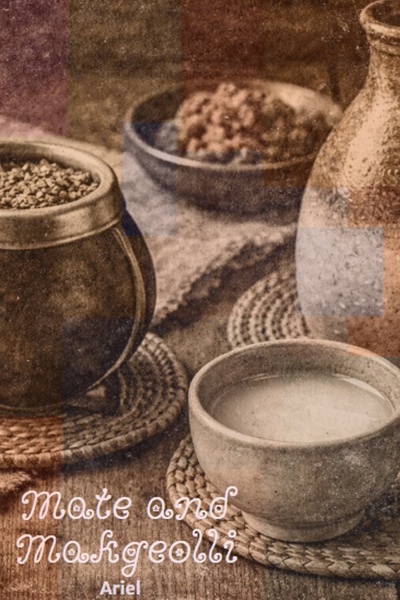
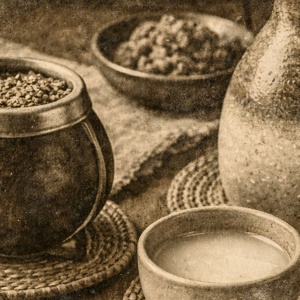
I started pulling ingredients from the shelves: sesame oil, chestnut flour, makgeolli syrup.
Tomás watched carefully as I began measuring.
“You’re recreating it,” he said.
“I’m trying to.”
“And what does that prove?”
I shrugged. “Maybe nothing.” I mixed the dough slowly. “But if you really remember this place…” I continued as Tomás stepped closer. “Then you might remember how it’s supposed to taste.” Our hands brushed slightly when he reached for the bowl. The contact lasted less than a second, but somehow the air in the kitchen felt warmer.
Tomás cleared his throat. “Lucía?”
“Yeah?”
“If we find those records…” I looked up. “And it turns out our grandparents were actually in some kind of secret relationship,” he said carefully.
I raised an eyebrow. “You think that’s where this is going?”
“I don’t know,” he admitted.
I thought about the photograph and the way they stood together. The way the recipes blended two cultures.“I wouldn’t be surprised,” I said quietly.
Tomás watched me for a moment. “Neither would I.”
The dough was ready. I shaped the cookies carefully and slid the tray into the oven. The warm scent of sesame and honey filled the kitchen almost immediately. Tomás leaned against the counter beside me.
“So,” he said.
“So?” I replied.
“When do we start our investigation?” I glanced toward the café windows, where the afternoon light had begun to soften. Then I looked back at him.
“Tomorrow,” I said.
Tomás smiled. “Detective work it is.”







Comments (0)
See all