
Perhaps it was a moral failing, but Euphemie was rather unenthused about the prospect of being torn limb from limb. That fate, at the very least, she had been certain she had avoided. Until she had seen Lady Amalia swing her sword endlessly, for hours, her focus singular. Who did that? There had to be murder on her mind.
Euphemie reminded herself that murder had likely already been on Amalia’s mind. It did not help.
Neither had her attempts to ingratiate herself into this place been particularly successful. In the imperial palace, there had always been at least one schemer in her midst. Here it seemed there were none, and until Euphemie could figure out what the unspoken rules of this place were, she was out of luck.
She had spent her days instead sitting in the garden, staring at nothing at all. Sometimes, she had tea. And so the days began to pass in slow, tense, silence.
Occasionally, she could sense she was being watched. Lady Amalia’s office window looked directly out onto the garden. Euphemie wondered what she was thinking. Was she imagining harsh punishments? Or was she simply waiting for Leopold’s orders, like an obedient dog?
She was, Euphemie mused to herself, nothing like the women in the capitol. Her mind, at the thought of that place, slid to Lady Rosa. Paragon of ladylike virtue, she had held tea parties and balls and recitals, impeccable in face and hair and body all the while. When she had spoke in that gentle voice of hers, the whole room had listened. Not even Leopold could command such presence.
Yet it is Leopold who lives, whispered the phantom voice of Lady Rosa in her head, shocking Euphemie enough that she knocked her teacup from the table.
Euphemie shut her eyes. Leopold had saved her. She had reason to be grateful to him.
He abandoned you.
As had Lady Margaret. As had Lady Rosa. As had many others. Euphemie had long accepted her role as a vessel. A vessel to love, a vessel to hate, until the day it became uninteresting.
In the days after Lady Rosa’s death, Euphemie had considered herself a corpse walking. She had poisoned Lady Rosa, and obviously so. The results had not been pretty, and the plant had been readily available in Rosa’s greenhouse. Evidence of Euphemie’s presence remained; the garden shears, her handkerchief (a gift from Rosa, monogrammed with her initials. Euphemie was never without it.), the fact that they had been taking tea together when Rosa had passed.
Yet despite the obvious evidence of poison, nobody ever came to arrest her. Kept among Lady Rosa’s possessions, Euphemie waited and waited for the day she would be dragged away and punished for her actions. Instead, it was Leopold who had noticed, who had found her, who had made her his and spirited her away to the palace.
She remembered how he had come to her, waiting amongst Lady Rosa’s other things, and sat down beside her. Looked her in the eyes.
“So,” he had said, “how did you do it?”
“Do what?”
“How did you kill Lady Rosa? Was it magic?”
Euphemie raised an eyebrow. Magic was the purview of learned men in towers. Peasants deep in the earth did not get to learn it. “It was not magic. What do you know of herbs?”
“Far less than I know about magic,” he had said, running a hand through his gold hair, the way a bird might preen its feathers. Was he trying to appear attractive? Surely he had heard the rumors about Euphemie and Rosa’s relationship...
“It was a matter of herbs,” Euphemie said. “You see the oleander in the greenhouse?”
“I do,” Leopold had said. “A beautiful, pink flower.”
“It is toxic to humans.” She had frowned at Leopold. “Any botanist could tell you that.”
She had spoken so rudely to him! But on that day it hadn’t mattered. She had been utterly certain of her death.
“It is a common decoration in gardens,” Leopold protested. “And I have no reason to consult a botanist on such matters. How did you administer the poison?”
“Easy,” Euphemie had admitted, with a shrug. “I asked my dear Rosa if we might make it into tea. I said that such a beautiful bloom would surely taste sweet. Then I made a strong dose for her, and masked the bitter taste with honey, rose, and lavender. I think she drank it all to please me.”
Surely now, Euphemie had thought, she would have her own release. Instead, Leopold had smiled sweetly.
“How would you like to be free of this place?”
His eyes had the green of arsenic, but in the daylight they had seemed almost as blue as the open sky. Of course Euphemie had said yes. What choice did she have?
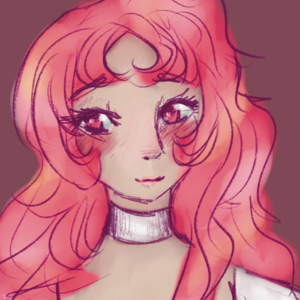
She wished now that she had worked up the courage to poison Leopold and escape into the night. But such a decision made little sense. Leopold was kind to her. For the first time since her capture she had felt safe. He asked questions of her, interested in her knowledge, and bestowed all manner of gifts upon her. He had even eschewed his engagement for her; his eyes were for Euphemie alone.
Lady Margaret had not appreciated any of this, and had scoffed at Euphemie’s every attempt to speak to her. Euphemie supposed she oughtn't to have been surprised. Why would the good Lady make nice with the slave trying to slither into her place?
“I was so naive,” Euphemie hummed aloud. It was her fault for assuming the three of them could get along.
Sighing, her mind turned to oleander. The one plant she still remembered, for its grand role in her life. Euphemie supposed it was too cold up here to cultivate. Unless she were to grab a knife, she had no way to fend for herself here.
Standing, she contemplated strolling through the garden for the thousandth time. Instead, she turned to the window, from where she was certain Lady Amalia was watching her. What did that creature want from her?
For once, her mind turned from fear to rage. How dare she watch? Did she have nothing better to do than trap Euphemie in a panopticon? In a flutter of her drab skirts, she strode back into the manor, past a dusty hallway, up a flight of stairs, to the door to Amalia’s office. She raised her hand to knock, then thought better, and shoved the door open.
There was Lady Amalia, seated in her chair, face turned towards the window. A letter sat upon her desk, unopened.
“Don’t you have something better to do than watch me?” Euphemie hissed. “Am I not boring? Is there something fascinating about the way I drink tea?”
Lady Amalia faced her, eyes wide. “I--”
“I keep wondering my purpose here. What did Leopold tell you to do with me? Are you keeping me safe or punishing me? I have had enough of waiting to find out.”
Lady Amalia blinked very slowly. “Miss Euphemie. You are safe here.”
“Enough!” Euphemie said. “I do not believe you.”
“I promise, my intentions with you are pure.”
“It is not your intentions I have worries about, Lady Amalia. It is Prince Leopold’s. What does he want from me? Out with it! I have given him my knowledge, my body, and my life already. What more is there?”
Lady Amalia rose very slowly, palms open, as though soothing some wild creature. Euphemie stepped back.
“Euphemie. Please understand. I answer to Leopold in matters of state, and nothing more.” She stepped around the desk with soft feet, the only sound the rustle of papers atop her desk. “He did not ask me to save you.”
Euphemie shuffled towards the doorway, but her back hit wood. It had swung shut behind her.
“What... do you mean?”
“I stopped your execution all on my own,” Lady Amalia said. “Nobody told me to do it. I promise you are safe here.”
How odd. It seemed Euphemie’s heart was beating quick. She was experiencing as well a bout of lightheadedness. Her hand found the doorknob.
“W-what do you want from me?” she whispered.
“Nothing,” said Amalia.
That was clearly a lie. Nobody wanted nothing. Lady Amalia must have some purpose. Euphemie must be a pawn in some plan.
“If you wanted nothing from me, then you should have left me to die,” Euphemie said. “I was supposed to die.”
Lady Amalia nodded. “Yes, you were. I didn’t care.”
“Tell me, really,” Euphemie growled, hand pulling at the doorknob. “What is it you want from me? Blackmail? Revenge? A scapegoat?”
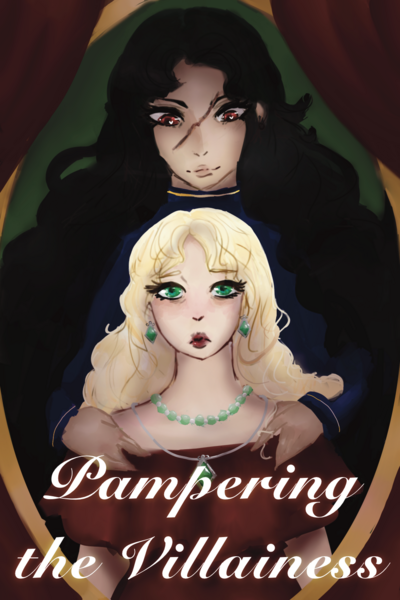
“I already said I desire nothing,” Amalia repeated with a frown. Her dark brows were furrowed, her face shadowed by her lion’s mane. Her worried eyes were as red and hot as blood. A fearsome creature, Euphemie thought, and a liar.
“I want you safe,” Amalia said. “I want you happy.”
Lady Rosa had said similar things, and Euphemie knew well how that had turned out. “You don’t. You want something for yourself.”
“Fine,” growled Amalia. “I saved you because of selfish whims. Does that make you happy to hear?”
Naturally, she had left out the part where she explained what those whims were. No matter. Euphemie would learn. She could fall back on her original plan: find out Lady Amalia’s desire, and hold it just out of reach.
“Very,” Euphemie said, and she threw open the door and rushed out into the hall.






Comments (1)
See all