
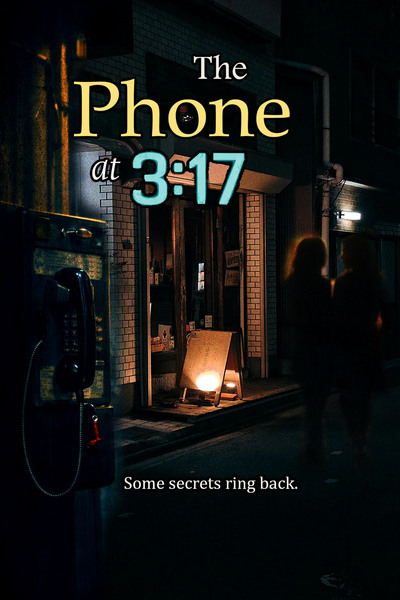
At 3:17 a.m., the payphone outside Harbor Nights began to ring.
It had no right to.
No one used it anymore. Not the late drivers who stopped for cigarettes, not the men who leaned against the pole across the street, not the boys who cut through the block at night with laughter too loud for the hour. The phone had stood there for years like something the city had forgotten how to remove. Rust along the edges. Faded green paint. A scratched plastic panel clouded by dust and old weather. Dead.
Dead long enough for people to stop looking at it.
And yet it rang.
Yara lifted her head from behind the wooden counter.
For a second, she did not move. Her hand stayed on the damp cloth she had been using to wipe the surface, while the restaurant remained exactly as it had been one heartbeat earlier: a few chairs still not pushed all the way in, a half-cold cup of tea abandoned by the window, and the smell of light frying oil, crushed mint, and coffee reheated once too often hanging low in the air.
Then the phone rang again.
Clear. Metallic. Old.
The sound cut through the restaurant so sharply it seemed to scrape against the walls.
Yara looked at the clock above the kitchen pass.
3:17.
The red digits glowed there, harmless and ordinary, while the ringing outside made them feel like something else entirely. Something she would remember later with painful precision. Not just the sound.
The minute.
3:17 a.m.
Harbor Nights had settled deep into her body over the years. She knew the place by instinct now: the lamp that flickered once before staying steady, the drawer that only closed if you lifted it slightly first, the fridge that hummed in one corner and then fell silent without warning, the glass door that made a tired complaint whenever the wind leaned against it from the street.
She knew it in the way people know a place that has outlived choice.
Not only through love.
Through repetition. Through staying. Through the quiet humiliation of building a life around what remained when the rest had already gone.
She had stayed after her father died. Stayed after his name became something people lowered their voices around. Stayed after the city had decided what kind of man he had been, and what kind of daughter that made her. She had stayed because this restaurant was the last shape his life had left behind, and because leaving would have felt too much like putting him down somewhere and walking away.
The phone rang a third time.
Yara straightened slowly.
There had to be an explanation.
A prank. A damaged line. Some electrical fault waking up in the middle of the night. Something stupid. Something ordinary.
But the sound did not feel ordinary.
That was the problem.
It felt aimed.
She stepped out from behind the counter and crossed the restaurant. The little bell above the glass door chimed when she pushed it open. Usually that sound comforted her. It meant someone had entered, or left. It meant things still followed rules.
Outside, the night air was colder than she expected.
The street was nearly empty. Across from the restaurant, the weak yellow streetlamp spilled light over the pavement without warming it. The corner shop had already gone dark. No footsteps. No moving shadow. No idling car.
Only the payphone.
It rang again.
Yara stopped in front of it.
Up close, it looked even deader than it had through the glass. The cord was stiff with age. The receiver hung in place with the dull patience of something that had spent years being ignored. She stared at it for a beat too long, then reached out and picked it up.
The ringing stopped.
At first, she heard nothing. Just a thin line of silence. Not static. Not breathing. Just emptiness, as if the connection itself had only barely woken.
Then a woman spoke.
Her voice was quiet. Calm. So calm it made Yara’s skin tighten.
“Your father didn’t steal the girl.”
Everything in Yara went still.
No one said that sentence casually. No one said it to her by accident.
The city had buried that story years ago beneath gossip, pity, disgust, and the satisfaction people take in believing they understand what ruined someone else’s life. Her father had died with the accusation still clinging to his name. In the mouths of strangers, it had become fact. In official language, it had become history.
And now, at 3:17 a.m., a stranger was speaking into a dead phone and dragging it back into the room.
Yara tightened her grip on the receiver.
The woman continued, her tone unchanged.
“He died because he hid her.”
A hard cold spread beneath Yara’s skin.
For a moment, she could not feel the night air at all. She could only hear the sentence, still moving through her, finding old wounds by memory.
When she finally spoke, her voice came out lower than she expected.
“Who are you?”
No answer.
“Who are you?”
This time anger moved beneath the question. Not loud anger. The sharper kind. The kind that rises when someone touches something buried and acts as if they have the right.
The woman spoke again, as though Yara had said nothing.
“If you want to know who your father died for, look under the third tile. To the right of the counter.”
Then the line went dead.
Not slowly. Not with static or a click or a fading breath. Just absence. Sudden and complete, as if the voice had existed only long enough to deliver that message and had no reason to stay.
Yara lowered the receiver from her ear and stared at it.
For one suspended second, she remained on the sidewalk with the dead phone in her hand, not quite thinking, not quite breathing.
Then she placed the receiver back.
Behind her, Harbor Nights glowed through the window with the same tired light as before. The same counter. The same tables. The same half-forgotten cup. Nothing in the room looked different.
But the minute had changed everything.
She looked once more at the street.
Empty.
No one by the pole. No movement behind the dark windows across the road. No figure disappearing around the corner. Even the wind seemed to have stepped back, careful not to disturb the scene.
Yara went inside and shut the door behind her. The bell chimed again, a small familiar sound that gave her something solid to hold onto.
She stood still for a moment.
The notebook was still open on the counter where she had left it. Numbers. Receipts. The remains of a normal night. The floor beneath her feet was a grid of old brown tiles crossed with thin gray lines, worn smooth by years of use.
She looked to the right of the counter.
Third tile.
Her stomach tightened.
Up close, the tiles looked almost identical. The first was chipped near one edge. The second duller from wear.
The third—
The third looked slightly darker.
Maybe it really was. Maybe it only looked different because someone had told her where to look.
Yara knelt.
The restaurant had become unnaturally quiet. She could hear the fridge humming again in the corner. The faint brush of her sleeve against the wooden base of the counter. Her own breathing.
And beneath all of it, one steady thought:
Who is doing this?
She ran her fingers along the edge of the tile.
Nothing.
She tried the lower corner.
There.
A tiny shift. Not enough to see, but enough to feel. As if the tile had been lifted once, long ago, then pressed back into place by careful hands.
Yara stood up, went into the kitchen, and came back with an old butter knife.
She slid the blade into the edge.
The tile resisted. Then, with a dry little movement, one side lifted.
Her heart hit hard once against her ribs.
It was a clean, brutal feeling. Not fear alone. Not shock alone. Something worse. The certainty that whatever waited beneath that tile had been there for years, and that touching it now would split her life into before and after.
She lifted the tile higher.
No box. No envelope arranged like a scene from a cheap mystery.
Only a small clear plastic bag, folded carefully, yellowed by time, with something flat inside.
Yara set the tile aside and picked up the bag.
Her fingers were steady. That frightened her more than trembling would have.
She opened it.
Inside was a photograph.
Old. Glossy. Thick paper, the kind people once held in their hands instead of scrolling past. The edges had curled slightly from damp, but the image itself remained sharp enough to hurt.
At first, it made no sense.
A pale floor.
A faded wall or background.
The shadow of a metal door falling across one side of the frame.
Then her eyes found the lower part of the image, and the air in the room changed.
A hand.
Small, but not a little child’s hand. Not an adult’s either. Something in between. It touched the floor as if the person it belonged to had fallen, or knelt, or tried to push themselves up.
Around the wrist was something red.
A ribbon. A bracelet. A strip of fabric. Maybe only a trace of color that should not have survived this long, but it was there. Red against the washed-out image, stubborn and wrong.
Yara raised the photograph closer to her face.
Something inside her recoiled before her mind had formed the thought fully. Not from gore. There was none. Not from anything obvious.
From implication.
From the way the hand looked caught between helplessness and motion, as if the photograph had stolen one small piece of a moment no one was meant to keep.
She turned it over.
No name.
No full date.
Only a number written in old pen, faint with age but still visible:
3
Yara stared at it.
Then she looked again at the front of the photograph.
The pale floor. The metal door. The hand. The red mark at the wrist.
And the number on the back.
Three.
The third tile.
At 3:17.
Slowly, Yara lifted her head.
The restaurant was still there around her, unchanged in every visible way. The counter. The sink. The forgotten cup by the window. Beyond the glass, the payphone had gone silent again, standing under the streetlamp with its usual dead indifference, as if nothing had passed through it at all.
But something had entered the room.
Something old.
Something hidden carefully enough to survive years under the floor.
And standing there with the photograph in her hand, Yara understood one thing with terrible clarity:
the night no longer belonged only to the present.
It had opened.
And whatever had been buried beneath that tile had just begun to rise.






Comments (2)
See all