
Yara did not sleep.
A few minutes before four, she was still inside Harbor Nights, moving through the restaurant as if motion alone could keep the night from shifting any further.
She washed a cup that did not need washing.
Rearranged the sugar tin twice.
Pressed the third tile back into place with her foot, then crouched to adjust it again with her hand, even though it was already straight enough.
The photograph remained in the back office.
She could not leave it in front of her.
And she could not put it away as if nothing had happened.
So she left it on the small table beside the old recorder and her father’s broken ashtray, half in the light, half in shadow, as if it too had not yet decided whether it was evidence or a curse.
Outside, the street was turning slowly from black into gray.
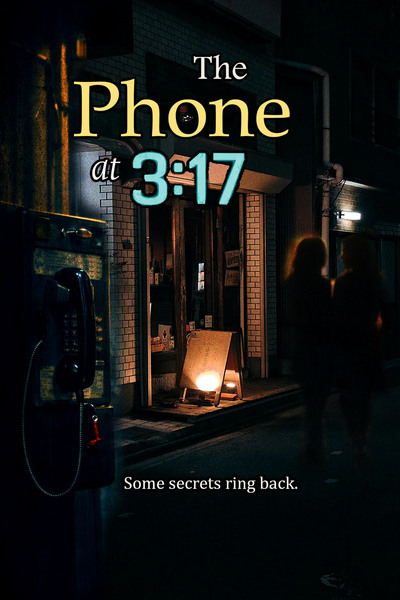
The yellow light above the payphone was still on, but useless now. The phone itself stood in complete silence. A rude kind of silence. As if the ringing less than an hour ago had not happened there at all, but had fallen briefly through the night from somewhere else and vanished.
Yara set the small coffee pot over the heat.
She did not want coffee.
She wanted a smell strong enough to push away the sentence still repeating in her head.
Your father didn’t steal the girl. He died because he hid her.
Each time she turned it over in her mind, it opened into a new kind of anger.
If it was true, then her father had not been the man the city had spent years forcing onto her as a finished fact.
And if it was false, then someone knew exactly which wound to touch, and exactly when.
Either way, she had no intention of forgiving the woman who had said it.
Then she heard an engine trying to start outside.
Once.
Twice.
Three times.
Yara lifted her head toward the window.
Across the street, beneath a short tree at the edge of the sidewalk, a small dark car sat with dawn dampness silvering its hood. Its lights were off. The engine tried again, coughed, and died.
A few seconds later, the driver’s door opened.
A woman stepped out.
She shut the door with one hand, looked toward the restaurant, then paused as if deciding whether to approach.
She was fairly tall. Black coat. Practical clothes underneath. Hair tied back in a quick, careful way. Nothing flashy. Nothing careless either.
In one hand she held a phone, the weak light of the screen enough to say the battery was almost dead.
Yara watched her through the glass.
This was not an hour when strangers walked in unless they were drunk, lost, or knew exactly what they were doing.
And this woman looked like none of the three.
She crossed the street.
At the door, she glanced inside first. Then, very briefly, her gaze flicked toward the payphone, as if she were only checking that it was still there.
A small thing.
Probably nothing.
Still, it stayed in Yara’s eye a second longer than it should have.
The bell above the door rang.
“Do you still have coffee?” the woman asked.
Yara did not answer immediately.
She looked at the car outside. Then the phone in the woman’s hand. Then her face.
It was the kind of face you might fail to remember if you passed it twice in daylight.
But the voice was more difficult to ignore.
Clear. Exact. The kind of voice that rarely wasted words.
“The restaurant is closed,” Yara said.
The woman gave a small nod, as if she had expected that answer.
“I know. My car broke down, and my phone’s almost dead. I just need one cup of coffee. Or hot water. And a charger for five minutes.”
A reasonable request.
But reason had stopped being comforting tonight.
“There’s a gas station on the main road,” Yara said.
“I know.”
The woman glanced back toward the street.
“But I don’t like leaving my car alone.”
Silence settled between them. Brief, but not easy.
Then the woman added, “I’ll pay.”
Yara almost told her money was not the problem.
But she was too tired to start another battle with someone she did not know.
She pointed toward the table nearest the door.
“Five minutes.”
The woman stepped inside and closed the door quietly behind her.
She sat where Yara had indicated, not too deep inside the restaurant and not right by the window either, as if she knew how to take up the smallest possible amount of space in a room that was not hers.
She set her phone on the table.
The red battery warning on the screen proved the story, at least in part.
Yara went behind the counter, poured coffee that was not properly ready yet into a small cup, and carried it over. After a beat of hesitation, she also held out an old charger from the drawer.
“This is what I have,” she said.
The woman looked up.
“It’s enough.”
She plugged the phone in.
For a brief second, her fingers brushed Yara’s hand.
Cold fingers.
Not just from the dawn.
Yara pulled her hand back.
“Thank you,” the woman said.
Yara said nothing.
She went back behind the counter but did not reopen the notebook. She only picked up a cup and wiped it again for no reason she could defend.
The woman took a sip of coffee.
“The coffee’s good,” she said.
“It’s not fully ready.”
A faint smile touched the woman’s mouth. Barely there.
“Maybe that’s why it feels honest.”
Yara looked at her.
Normally she hated that kind of sentence. The kind that reached for meaning too quickly.
But this one did not sound rehearsed.
It sounded observed.
“Do you say that about every bad cup of coffee you get?” Yara asked.
The woman lifted the cup slightly.
“No. Some coffee doesn’t deserve an opinion.”
That almost pulled a smile out of Yara.
Almost.
“What’s your name?” she asked.
The woman set the cup down.
“Haneen.”
“Just that?”
One eyebrow lifted, not in challenge, more like mild interest.
“Do I need a full name to use a charger?”
“At this hour? Yes.”
The woman was silent for a moment.
Then she said, “Haneen Murad.”
“Yara.”
Haneen looked at her for a second longer than necessary.
“I figured.”
Yara stiffened.
“From what?”
Haneen tipped her head slightly toward the counter.
“Your name is written on the account book.”
Yara looked down.
A small thing. An ordinary thing.
It bothered her anyway.
Because she had not noticed it.
And because Haneen had.
“You notice a lot,” Yara said.
“Sometimes that helps.”
“And sometimes it’s annoying.”
“Yes.”
She said it so simply that the answer landed without vanity.
Haneen took another sip, then looked at Yara properly for the first time.
“You’re tense.”
The sentence was direct enough to sound rude, but the tone itself carried no aggression.
“This is a great hour for observing strangers,” Yara said.
“In general, yes.”
Haneen traced one finger lightly along the rim of the cup.
“But tonight your tension isn’t ordinary. You look at the door more than you look at the person in front of you.”
Yara did not like how accurate that was.
“Maybe you’re imagining things.”
“Maybe.”
And then Haneen let the silence sit.
Smart.
Smarter than pushing.
The payphone rang.
Not the phone charging at the table.
Not Yara’s phone.
The payphone outside.
Yara’s head snapped toward the glass.
Haneen froze, the cup halfway to her mouth.
The phone rang again.
This time Haneen turned fully toward the window. She saw the payphone. Saw Yara. And saw enough change in Yara’s face to understand that this was not some minor technical glitch.
“That’s not normal,” Haneen said quietly.
Yara was already moving.
She came out from behind the counter fast now, no longer pretending she was calm.
“Wait.”
Yara turned sharply toward her.
Haneen had picked up her phone, barely charged.
“If this matters,” she said, “record it.”
Yara stopped.
The suggestion was simple. Obvious.
It had not occurred to her.
She hated that.
She held out her hand.
Haneen passed over the phone immediately. It was already open to the recording app.
“Hold it close to the receiver,” Haneen said. “Not just to your ear.”
The payphone rang a third time.






Comments (2)
See all