
Yara stepped outside.
The dawn air was colder now. The ringing sounded louder too, as if the phone had decided that being heard once meant it no longer had to be subtle.
She picked up the receiver with one hand and held Haneen’s phone near it with the other.
The woman’s voice came at once.
“If you want to know where the blood began… don’t look at the house. Look at the place where metal enters before it cools.”
Anger flared through Yara immediately.
“Who are you?”
The woman continued as though she had not spoken.
“Your father wasn’t taking those photographs for nothing.”
“Who are you?”
A brief pause.
Then the woman said, her voice lower now, almost intimate in its calm:
“Listen carefully. Not to me. To what’s behind me.”
She fell silent.
But it was not empty silence.
Behind her, there was something else.
A distant metallic strike.
A short scrape.
A whistle too brief to belong to a station.
Then a steady mechanical hum, low and constant, as if some large machine were breathing through metal.
“Talk,” Yara said sharply.
The line went dead.
She stood there for a second longer, holding the receiver and the phone, listening to nothing.
Then she went back inside.
Haneen was still by the table, but something in her posture had changed. More awake now. More exact.
“Give it to me,” she said.
Yara handed her the phone.
Haneen stood.
Not like a customer anymore.
Like someone stepping closer to the edge of her real work without needing to announce it.
She replayed the recording.
The first time, Yara only heard the woman’s voice and the words she had already memorized.
Haneen lifted one finger.
“Quiet.”
She replayed the last few seconds.
The strike.
The scrape.
The whistle.
The hum.
Again.
“A train?” Yara asked.
Haneen shook her head immediately.
“No.”
“Then what?”
Haneen held the phone closer to her ear. One eye narrowed slightly, as if listening required the rest of her face to get out of the way.
“It’s not a train,” she said. “The whistle is too short for a main rail line. The hum is steady. More like refrigeration or an old generator. And the echo is enclosed. Not open air.”
Yara stared at her.
“You can tell all that from two seconds?”
“Three and a half, roughly.”
From anyone else, the answer would have sounded unbearable.
From Haneen, it sounded like measurement. Nothing more.
“There’s metal,” she said. “An enclosed space. Something mechanical that’s been running for a long time. And the movement sound isn’t a train passing. It sounds more like something being loaded. Or unloaded.”
She moved toward the window.
Looked once at the payphone. Once at the street. Then back at the phone.
“Are there old cooling units or warehouse loading areas near the harbor?”
Yara was silent for a moment.
Then: “The back industrial zone.”
“Near the tracks?”
“Yes.”
Haneen replayed the clip again.
“Most likely there.”
She did not say it with dramatic certainty. But she did not say it like a guess either.
It was enough to make the whole street feel narrower.
“Who exactly are you?” Yara asked.
Haneen turned to face her.
In the growing gray light, her face looked more tired than before. Not tonight-tired. The older kind. The kind that comes from too many short nights in a row, or from learning never to let one part of yourself go fully to sleep.
“I work with sound,” she said.
“That’s a job title. Not an answer.”
“It’s the answer to the question you asked.”
The reply irritated Yara.
Which only made the fact that she respected it more annoying.
“So you help strange women at four in the morning because a dead payphone rings and makes strange noises?”
“No.”
Haneen looked down at the phone in her hand, then back up.
“But I don’t like sounds that get left without an explanation.”
The sentence was simple.
Too simple to hide behind.
And for the first time, a thought flashed through Yara fast enough to feel like instinct rather than reason:
Haneen was not standing in this moment as a complete outsider.
Maybe she did not know this exact voice.
Maybe she did not know this exact story.
But she knew what it was to hear something wrong and follow it.
Yara did not push further.
Not because she trusted her.
Because she understood that Haneen knew more than she was offering, and that asking too hard, too early, would only get her a wall.
Haneen glanced at Yara’s hand.
It was still gripping the edge of the counter too tightly.
“You haven’t had anything since the first ringing, have you?”
Yara said nothing.
Haneen set down the phone, crossed to the counter, took a glass from the shelf, filled it with water, and placed it in front of her.
“Drink this first.”
The gesture itself was small.
But when Yara reached for the glass, their hands touched for a second.
Haneen’s hand was not cold now.
It was steady.
And that unsettled Yara far more than kindness would have.
She drank.
Then, still looking at the glass, said, “I don’t know why I’m letting you stay.”
“Because you don’t want to hear this alone,” Haneen said.
Yara looked up.
That was the first answer Haneen had given since walking in that felt like it came from underneath the words rather than through them.
“I don’t trust you,” Yara said.
Haneen nodded once.
“That’s fair.”
“But I’m going there.”
“The industrial zone?”
“Yes.”
“Now?”
Yara looked through the window at the sky, pale and gray and undecided.
Dawn had reached that hour when the city was not innocent anymore, but not fully awake either.
A good hour to move.
A better hour to be missed.
“Before the sound gets cold,” she said.
Haneen understood immediately.
She unplugged her phone and checked the battery. Barely enough.
“My car might start if I leave it a little longer.”
“And if it doesn’t?”
Haneen picked up her coat.
“Then we take yours.”
The answer came too naturally.
As if she no longer saw herself as a guest, only as someone who had already stepped far enough in to keep going unless forced out.
They looked at each other for a second.
“If this turns out to be some stupid game—” Yara began.
“You can hate me on the way there,” Haneen said, “not after.”
This time Yara did smile.
Small. Tired. Real.
She turned off the coffee machine, closed the account drawer, and threw one brief glance toward the back office where she had left the photograph.
It was still there.
And the hand in it had not become less real because a stranger had walked in, drunk unfinished coffee, and recognized a sound.
“Wait here,” Yara said.
She went into the office, took the plastic sleeve with the photograph, slipped it into her bag, then opened the bottom drawer and pulled out her car keys, a flashlight, and an extra jacket.
When she came back, Haneen was standing near the door, looking outside instead of into the restaurant.
Not snooping.
Not pretending not to.
Just waiting.
For some reason Yara did not want to examine too closely, that eased something in her.
“There’s something else,” Haneen said.
Yara stopped.
“What?”
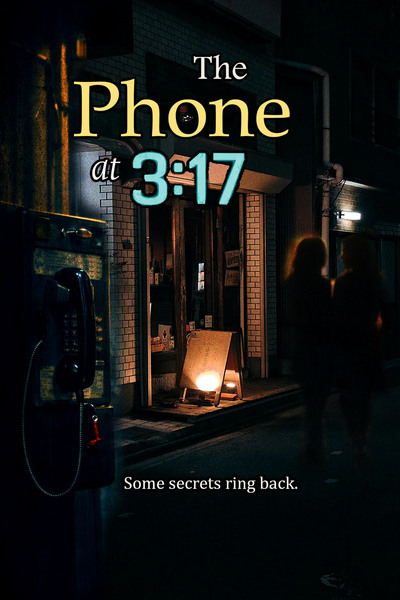
Haneen pointed toward the payphone.
Yara looked.
The receiver was not hanging exactly as she had left it.
It was moving.
Very slightly. Barely enough to notice. As if the wind had touched it.
Or a hand had.
“Did you do that?” Yara asked.
Haneen turned, calm as ever.
“I was inside with you.”
They both looked at the phone.
Then Yara opened the door.
The bell rang above her.
She stepped outside, crossed the short distance to the payphone, and lifted the receiver.
Silence.
Only silence.
But in the small metal holder beneath the panel, where thin number booklets used to be kept years ago, there was a folded piece of paper that had not been there before.
Yara took it.
Opened it.
Inside, in quick, uneven handwriting, were two words:
Rear loading
She stared at them for a moment, then went back inside.
Haneen was waiting.
Yara handed her the note.
Haneen read it once, then looked up.
“So it’s not just an industrial site.”
“No. Rear loading.”
“And that narrows it.”
“How much?”
“Enough to start,” Haneen said. “Not enough to relax.”
Yara slipped the note into her bag beside the photograph.
Then she looked around Harbor Nights one last time.
At the chairs.
The dim light.
The cup still waiting in the sink.
The counter beneath which the third tile sat in place again, as if nothing had ever been hidden there.
“I’m going to know,” she said.
Not quite to Haneen.
Not quite to herself.
Haneen did not ask what.
As if she understood that some sentences begin deeper than language and do not need finishing to be true.
This time they opened the door together.
The bell rang once above them.
Short.
Clear.
And outside, dawn opened one cold gray eye over the city, not yet knowing that before the morning was over, it would be forced to see more than it wanted.





Comments (0)
See all