
Only then did Amina’s face truly freeze.
A very small detail, but clear.
A slight widening in the eyes.
A tightness in the neck.
The hand near her bag turning rigid.
She looked at Haneen first.
Then at Yara.
And in a lower voice, she asked, “Who told you that?”
“So there were white tiles,” Yara said.
Amina did not answer.
But she did not deny it either.
And that was enough.
“Listen to me carefully.”
Then she looked directly at Yara for the first time since sitting down.
“If you go into this, don’t go in thinking you’re only looking for your father’s innocence.”
Yara stayed silent.
“Your father did what he thought was saving someone,” Amina said. “But saving someone does not erase the wreckage it leaves around him.”
Yara wanted to ask, Then who created the wreckage in the first place?
But something in Amina’s face told her that if the answer came out now, it would silence her forever after.
So instead she asked, “What do you want from me?”
“Leave the old hospital alone today.”
Haneen spoke immediately.
“Why today, specifically?”
Amina turned to her with a cold sharpness.
“Because if you go in now, you’ll go in with eyes that don’t know where to look.”
“And you do?” Yara asked.
A long second passed.
Then Amina said, “I know enough to tell you that some doors in there do not open by themselves.”
The sentence stayed in the air.
Not a full confession.
But not a denial either.
And more important than that: it did not sound like the warning of someone trying only to escape guilt.
It sounded like the warning of someone who had seen something that still had enough life in it to poison an entire day.
Amina stood up.
Not with elegance.
With the short finality that came just before complete retreat.
She picked up her bag.
Looked at the shoe one last time.
Then at the photograph.
Then she said, without looking at Haneen now, “If you want to know why Younes kept all of this... look for the night when blood mattered more than the name.”
Then she turned toward the door.
“Amina.”
Her hand stopped on the handle.
“Was there more than one?”
She did not turn back.
She stood there for two full seconds before answering.
“There was enough to make a man like him write the little one doesn’t sleep alone.”
Then she left.
The bell over the door rang.
Short.
Clear.
Harsher than it should have been.
Yara stayed where she was.
The photographs in front of her.
The shoe at the edge of the table.
The notebook open to a sentence that no longer allowed her to return to any simple meaning of fatherhood, rescue, or innocence.
“She didn’t give us the truth,” Haneen said after a moment.
Yara’s eyes stayed on the door.
“No.”
“But she gave us where it lives.”
Yara looked at her.
“The blood. The white tiles. And the hospital she doesn’t want us going to today.”
A second passed.
“Then we go tonight,” Yara said.
Haneen did not answer immediately.
She only pulled the third photograph closer, looked at the dark edge of the face and the small hand near the dress, then said, “Then we don’t go blind.”
Yara lifted her eyes to her.
And there was something strange in Haneen’s voice now.
Not only the mind already arranging the next step, but something closer to commitment.
The kind that was never said directly, but remained in the room after the sentence.
“And you?” Yara asked.
Haneen looked up from the photograph.
“What about me?”
“Are you coming?”
The question could have been purely practical.
But it did not come out that way.
Haneen understood that.
Or maybe she heard it in Yara’s voice before she understood it.
“Yes,” she said quietly.
Then, after a short pause, she added, “And don’t choose tonight only because you’re angry. Choose it because you don’t want to go alone.”
Silence fell between them again.
But it was no longer the same silence.
Outside, daylight had fully settled over the street.
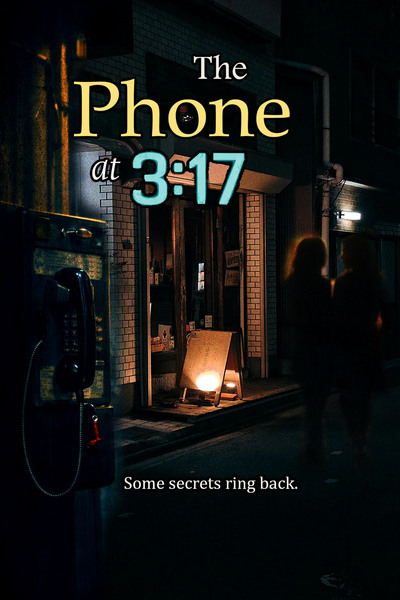
And the payphone stood motionless in its place.
No ringing.
No speaking.
As if it had done what it needed to do, for now, and returned to being an object again.
But inside Harbor Nights, nothing looked ordinary enough anymore to be believed.





Comments (0)
See all