
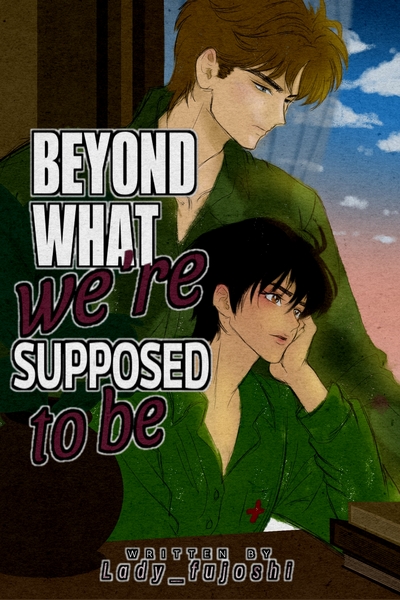
Beyond What We’re Supposed to be
At first the messages were careful. Charles wrote about classes he didn’t enjoy and meals he barely remembered eating. Yiannis replied with shorter answers, but he asked things that made Charles pause before typing back. Not big questions, nothing dramatic, just small ones that landed deeper than expected. What do you do when you can’t sleep. What do you miss even when it’s still there. Charles didn’t always answer directly. Sometimes he sent stories instead. Somehow Yiannis understood them anyway.
Weeks turned into months, and the tone shifted without either of them naming it. They stopped introducing topics and started continuing them. Charles would mention something in passing, and Yiannis would return to it days later like it had been sitting with him the whole time. There were gaps too, quiet stretches where neither wrote, but it never felt like losing ground. It felt more like breathing.
They never exchanged photos. Not seriously. There was one attempt early on, a blurry image Charles sent of his desk that accidentally included half his face in reflection. Yiannis didn’t comment on it. He only asked about the sketch pinned to the wall. After that, it stayed like that. Words without faces. It made things easier in a way neither of them said out loud.
When the program ended, it ended without ceremony. No final message, no goodbye that marked the shift. Charles meant to write one more time. He even opened a blank email and stared at it longer than he’d admit. Then days passed, then weeks, and the silence hardened into something that felt too late to fix. Yiannis didn’t reach out either. Life moved in, quiet but firm.
College came, and Charles chose art because it was the only thing that made sense to him. Not because he thought it would lead somewhere stable, but because it gave shape to thoughts he couldn’t say properly. He lived in a rhythm of classes, part-time work, and long nights that blurred into each other. He still thought about those emails sometimes. Not often, but enough that they stayed somewhere near the surface.
Then the war started, and everything that felt steady broke apart without warning.
It didn’t arrive as a single moment. It built up through news that sounded distant until it wasn’t. Sirens replaced routine. Streets emptied in a way that made every step echo. Charles stopped going to class before anyone officially told him to. The campus turned into something else overnight. People scattered. Some left the city. Some stayed and waited, like waiting would somehow make sense of things.
Charles didn’t leave. He told himself it was because he needed to find his family, but the truth was messier than that. He didn’t know where to go, and staying felt like a decision he could still control. When the medical stations started forming, he showed up without thinking too much about it. He had no training worth mentioning, just enough basic knowledge and a willingness to keep moving when others froze.
At first they had him carrying supplies, cleaning wounds, doing whatever was needed without asking questions. He watched more than he spoke. Learned fast, not because he wanted to but because he had to. Days stretched long and sharp, filled with noise and the kind of exhaustion that settled into bone. He stopped counting time properly. Nights were just quieter versions of the same work.
Somewhere in all that, he tried to reach his family. Calls that didn’t connect, messages that never delivered. He walked farther than he should have, checking places he already knew would be empty. He told himself they might have moved, that maybe they were somewhere safer. He held onto that even when it started to feel thin.
He kept going back to the station. It became the closest thing to a fixed point. People came and went. Some didn’t make it out. Charles stopped asking for names because it made things harder. Instead he focused on what was in front of him. A wound to close. A fever to bring down. A hand to hold when there was nothing else left to offer.
It felt like the world had narrowed into something small and relentless. Like everything outside that space had already been decided.
And still, sometimes, in the rare quiet moments, he would remember those emails. Not clearly, not in full sentences, just fragments. The way Yiannis asked questions that didn’t demand answers. The way he seemed to understand things Charles never explained properly. It was strange what the mind held onto when everything else was falling apart.
Charles didn’t think he would ever meet him. Not then. Not in that kind of world. It felt like something that belonged to a different life entirely.
But the war had a way of folding distances into something smaller, tighter, until paths that should never cross ended up colliding anyway.
By the time the first evacuation order came through the station, it didn’t feel like a plan. It felt like a suggestion someone hoped would stick. People argued over it in low voices, then louder ones, then stopped arguing altogether when the next wave of injured came in. Charles heard the word leave more than once, but no one actually did. Not yet.
He stayed because leaving meant choosing a direction, and he still hadn’t accepted that there might be nowhere left to go. He kept working, hands steady even when his thoughts weren’t. The doctors stopped double-checking him. Someone handed him a list one morning and didn’t explain it. He followed it anyway.
A week later, the station took a hit. Not direct, but close enough that the walls shuddered and something in the ceiling gave way. Dust filled the air so thick it felt like breathing through cloth. For a moment, everything paused. Then it didn’t. People moved faster, voices sharper, decisions made without discussion. That was the day they told him they couldn’t stay.
They split into groups. Smaller, easier to move, harder to track. Charles ended up with a team he barely knew, led by someone who didn’t waste time on introductions. They had a route, or at least the outline of one. Move north, avoid the main roads, find the next operating station if it still existed. It sounded simple when said out loud.
It wasn’t.
The first night out, Charles didn’t sleep. He lay on his back staring at a sky that didn’t feel familiar anymore, listening to the quiet that wasn’t really quiet. Every sound carried differently. Too clear. Too close. He kept expecting something to break through it.
“Relax,” someone near him muttered. “If something was coming, you’d know by now.”
“That’s not reassuring,” Charles said without turning.
“Wasn’t meant to be.”
The man didn’t say anything else. Neither did Charles.
They moved before dawn. It became routine quickly. Walk, stop, listen, repeat. Talk only when needed. Eat when there was time, not when they were hungry. Charles adjusted without thinking about it. He had learned that much already. Keep up or fall behind. Falling behind wasn’t an option anyone said out loud.
On the third day, they ran into another group.
It happened fast. Too fast for questions. One moment the path ahead was empty, the next it wasn’t. Voices called out, hands went to weapons, and everything balanced on a thin edge that could go either way. Charles stayed where he was, heart loud in his chest, waiting for someone else to decide what this was going to be.
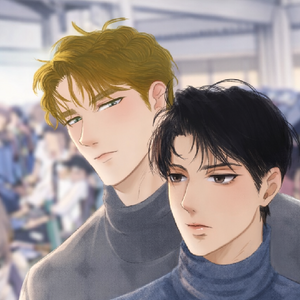
A man stepped forward from the other side. He didn’t raise his voice. Didn’t need to. There was something in the way he held himself that made people listen anyway.
“We’re not here to fight,” he said. “Not unless you make it necessary.”
Charles didn’t look at him right away. He focused on the ground, on the space between them, on anything that wasn’t the weight in the air. Then something in the voice pulled at him, quiet but insistent. Familiar in a way that didn’t make sense.
He looked up.
It wasn’t recognition at first. Not clean, not certain. Just a feeling that landed before the thought did. The man looked older than he expected, harder around the edges, like the world had shaped him quickly and without care. But there was something there, underneath all that, something that didn’t match the present.
The man’s gaze moved across their group, assessing, counting. It paused when it reached Charles. Not long. Just enough.
“Medic?” he asked.
Charles blinked. “Yeah.”
“Good. We could use one.”
“That’s not how this works,” someone from Charles’s group cut in. “We don’t just merge because you ask.”
The man didn’t look at the speaker. His attention stayed on Charles, like the answer mattered more coming from him.
“You have a better plan?” he said, calm as before.
No one answered that.
There was a stretch of silence that felt longer than it was. Then a decision, quiet but final, passed through both groups without needing to be announced. Weapons lowered, just a little. Enough.
They moved together after that, not as one unit yet, but close enough that the distance didn’t mean much. Charles kept his head down at first, focusing on his steps, on the rhythm of movement. But he was aware of the man ahead of him in a way he couldn’t ignore.
Later, when they stopped to rest, the man approached him without hesitation.
“You’re keeping up,” he said.
“So are you,” Charles replied, not sure why that was the first thing that came out.
A faint shift crossed the man’s expression. Not quite a smile.
“What’s your name?”
Charles hesitated. It felt strange, giving something that simple away.
“Charles.”
The man nodded once, like that confirmed something for him.
“Yiannis.”
The name landed harder than it should have. It shouldn’t have meant anything. It was a common enough name. But paired with the voice, the way he spoke, the questions he chose not to ask, it pulled something from memory that Charles had kept buried under more immediate concerns.
He looked at him properly then, searching for something he couldn’t fully define.
“You’ve been doing this long?” Yiannis asked.
“Long enough,” Charles said. He crossed his arms without thinking. “You?”
“Since it started.”
“That doesn’t narrow it down.”
Yiannis glanced away for a second, then back. “Fair.”
Charles almost asked something else. Didn’t. The moment passed.
“Get some rest,” Yiannis said. “We move again soon.”
He turned to leave, then paused like he was about to say more. He didn’t. He walked off instead, called over by someone else, pulled back into whatever role he held with his group.
Charles watched him go for a second longer than necessary, then looked away.
It didn’t make sense. The feeling, the familiarity. It had been years. Different countries. Different lives. People changed. Voices changed.
And still.
He pressed his fingers briefly against his temple, like that might clear the thought out.
“Something wrong?” the man from earlier asked.
“No,” Charles said. Then, after a beat, “Just tired.”
“Join the rest of us,” the man said. “It’s easier if you don’t think too much.”
Charles let out a quiet breath. “Yeah. I’m starting to get that.”
He sat down with the others, but his mind didn’t settle. Not completely. Something had shifted, small but noticeable, like a thread pulled loose from something tightly woven.
He didn’t follow it. Not yet.
There were more immediate things to worry about.
There always were.






Comments (0)
See all