
After Euphemie’s village had been burned and she had been taken, she had been held in darkness with other Lavendians, caged and battered, sold off one by one to those of the Holy Empire who wanted a cut of the spoils of war.
She had ended up in the household of a duke, cleaning his floors, his tables, his linens, her eyes turned to the floor. They had not minded her speaking Lavendian, or humming her mother’s lullabies, but had laughed and chittered about her doing so, studying her language, treating it as though it were some lesser ‘thing.’
The first word in the Imperial Tongue she had learned meant “barbarian.” The second, “fascinating.”
In those early days, when Euphemie had still clung to the memories of the Kingdom of Lavender, she had wondered if ever she would see her home again, with its bright fields and open skies. That had been until--
“Ah, what a sweet thing you are.”
--Lady Rosa had found her.
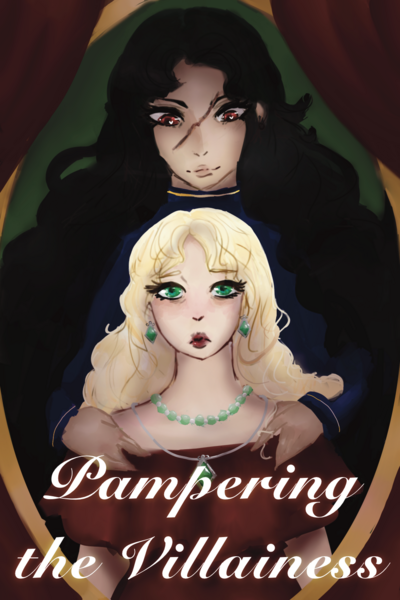
When their eyes had first met, Euphemie had thought her face warm and kind, a comfort in the afternoon light. The woman had gentle, blue eyes, and hair the color of spun gold. Lady Rosa had held out her hand, soft and inviting, and Euphemie had taken it. Lady Rosa had purchased her, rescued her from the duke’s house, and taken her back out into the sun.
For the first time since the invasion, Euphemie had felt safe. No longer was she required to scrub floors until her back hurt, to eschew rest, to submit to any order. No longer was there chittering about her language, her culture, or eyes that wandered where they oughtn’t. All that was required of her was to be Lady Rosa’s companion.
She ought to have remembered back then that she was still a slave. No matter how kind Lady Rosa was, no matter how charming, no matter how close they became, Euphemie was disposable, and Lady Rosa was not.
“You’re safe now, with me,” Lady Rosa had often told her, holding her close. And Euphemie hadn’t been.
How was she to trust that Lady Amalia would be different?
Afternoon light had replaced the morning’s rays, just as Euphemie shut the book on her lap. If she was lucky now, having called for tea in this room and spent her day here, the residents of this place would think her literate, not a barbarian or an uneducated slave but a delightful, ladylike creature.
A delightful, ladylike creature who now had a dagger. A small part of Euphemie wondered if Amalia was setting her up to fail. All Euphemie had to do was use this blade, and she would be sent back to her execution in punishment.
Yet people who were baiting you did not so easily bare their own necks. Euphemie shut her eyes and tried to banish the memory of Amalia kneeling before her, eyes strange, a lion’s purr coloring her voice, but she could not. Perhaps it was how close she had been, enough that Euphemie became aware of each little breath she took.
Euphemie had experienced something akin to this before, with Lady Rosa. Frowning, she attempted to banish the feeling, and the memories, from her heart.
It had been so easy to lose her memories of home, hadn't it? She barely thought of that place anymore. And yet it felt Lady Rosa was always with her, a shackle around her heart.
A memory: Lady Rosa teaching her to play the piano. Funny how she had done that but had never bothered to teach Euphemie to read.
Shutting her eyes a moment, Euphemie stood. The dagger slipped easily into a pocket in her skirts. In moments she was strolling once more through the house, unsupervised. The occasional maid passed; were they watching her, she wondered? Did they suspect she might steal something?
Perhaps she should. Perhaps she ought to stockpile whatever riches she could find.
And go where?
Frowning, Euphemie strolled with purpose through the manor’s dim halls, as though she had somewhere to be. Of course, she had nowhere to be, but it was better to seem occupied than idle.
In the Imperial Palace, there had always been something to do. Visiting dignitaries to charm, tea parties to attend. Euphemie had been a pariah and a public figure there. The slave that had become Leopold’s mistress. Shouldn’t she know her place?
Of course, there had been those who believed Lady Margaret should simply disregard her. Why should she be upset when Euphemie was merely property?
For her part, Lady Margaret had seen Euphemie as an adversary. For her part, Euphemie had found it refreshing. For a moment, it almost had seemed like Margaret considered her an equal. Almost.
Mondlicht was very strange. Nobody here treated her like a slave. She had not even seen any in the manor, despite the fact that this was the sort of place they ought to be. She knew very little of Lady Amalia, but hadn’t she commanded an army? Where were her war prizes? Her trophies?
She thought again of the knife, of Amalia’s waiting neck, and wondered if perhaps this time, this woman would be different.
Such thoughts occupying her mind, she strolled. Paused. Pulled the knife from her pocket and examined it once more.
Lady Rosa, upon purchasing Euphemie, had showered her with gifts. Heavy earrings, bracelets and necklaces. Layer upon layer of gown, an ivory comb, a pin for her hair. Brooches, rings. It had all glittered so brightly. Euphemie the Lavendian peasant had only been able to dream of such gifts, and yet they had come to her so quickly, as though she were the princess of some faraway land and not a slave.
It had grown old quick. Any time Euphemie was upset, here came a new string of pearls, a tapestry for their shared room, a dress in the latest fashion. At the time it had seemed all so very wonderful, to be pampered. Yet it had grown old.
From the outside, perhaps she seemed to have grown ungrateful. Lady Rosa had rescued her from abuse and given her a warm home, a soft bed! What more could Euphemie want?
She had thought the same thing once.
From Lady Rosa: all the gold and jewels in the world, in a manor that seemed wider and emptier and colder, day by day by day.
From Lady Amalia: a knife.
A sad, plain thing. Lady Rosa would have had the handle encrusted with jewels and the blade etched with patterns, beautifying it and preventing comfortable use. The edge would have been dull.
Euphemie unsheathed the knife and tapped the blade with her finger, curious. It had a bite to it; she squawked in an undignified manner and stuck the tiny injury into her mouth, before the bleeding started.
The knife was sharp. Good to know. Euphemie probably could have found something similar in the kitchen. Who needed a hand delivery? Who needed a demonstration?
Amalia had waited, calmly, while Euphemie held the knife to her throat. Did she simply believe Euphemie incapable of being a threat, or did she not care? Or did she care more about proving... that she could be trusted?
Stopping in the hall, Euphemie shut her eyes.
Lady Amalia is your jailer, she reminded herself. Lady Amalia rode here just to punish you. Lady Amalia went to war with your people. Lady Amalia considers you a lesser creature. Lady Amalia is a lion. Beware her teeth.
Lady Rosa had given Euphemie nice things too. Lady Rosa had taken her somewhere safe and warm and lavished her with gifts and attention and servants. Euphemie allowed herself to wonder if Amalia was different. But what made Amalia different?
She scowled, sheathed the knife, and pocketed it once more. It matters little that Amalia gave you a blade, she reminded herself. If you hurt anyone, you will be killed. If you are caught with it, you will be killed unless Amalia vouches for you. You are at her mercy. You are under her power.
She slipped her hand in her pocket and thought again of the knife. How Lady Amalia had capitulated beneath it and listened to Euphemie. Her red eyes, half lidded. Calm. Expectant.
For how long had Euphemie been used to being powerless? In the Imperial Palace, she had been afforded some control. Maids had done her bidding, had they not? She had lived a royal life, eaten the finest foods, draped herself in strings of pearls and glittering jewels and satin and silk.
Lady Amalia had given her drab clothing, a boring dagger, and hearty but plain meals. Euphemie could bathe if she desired, stroll where she liked, and explore the library. She could chat with the maids while they did their work. And she could wander unbothered, as though she were a guest instead of property.
It was not the height of imperial living, but it was a start.
Here now was the first inch. Euphemie would take a mile.





Comments (2)
See all