
The Atlantic hit like a fist. Cold—so cold it chased the air from my lungs and forced every muscle in my body to clench, then unclench, then clench again. My first instinct was to fight it, kick to the surface and gasp. Instead, I remembered what I’d been taught: let it in. Let the cold rush in and flush the heat from your skin and the tension from your joints, and eventually, you’d equalize. You had to, or you’d never make it through the first minute.
I gripped the line with both hands, exhaled a shaky stream of bubbles, and looked down. The world had turned a brilliant, impossible green. I’d seen underwater before—lakes, pools, even a quarry once—but the ocean was different. The light here wasn’t sunlight at all, it was oceanlight, bouncing off particulates and plankton, illuminating every inch of water between me and the bottom with a kind of humming, predatory glow. It made everything look a little supernatural.
He was already there, waiting on the descent line. Twenty feet below, maybe a little more, but he hung suspended like he belonged there. His arms floated loose at his sides, his body perfectly vertical in the water column, not even a hint of the gentle bicycle kick most divers used to steady themselves. I envied the stillness. I had to force myself not to kick, not to struggle, but he made it look like a meditation. Like he could do this for hours.
He saw me immediately. He didn’t wave, or nod, or do anything showy. Just the “okay” sign—thumb and forefinger pinched into a circle, other three fingers splayed. He held it for a beat, waited for me to return it. I did. He seemed to smile even through the mask and reg, his eyes alight with mischief. That was the thing about him: even underwater, even with all that gear, he could telegraph a smile.
I kept descending, trying not to let the pressure in my ears get ahead of me. My breath came in slow, deliberate pulls through the regulator, each one louder than it needed to be. Not from fear or cold, exactly, but because he was right there. Waiting for me.
The rest of the group was above and behind—Karma, Mario, Brian, and the rest of the gang. They’d all paired up, but it felt like a parade behind me, every one of them more focused on their own gear, their own nerves, than on the scene playing out twenty feet down. Good. I didn’t need a peanut gallery.
I reached him at the twenty mark, checked my gauge out of habit. Braden let go of the line and drifted up a foot to meet me, easy as exhaling. He didn’t need to look at my equipment or check my pressure—he just knew. He gestured downward with a lazy flick of two fingers, the universal signal for “let’s go.”
As we dropped, I let myself look at him. He wore his suit like a second skin, but I knew from the way it compressed at the shoulders and forearms that the body underneath was built for exactly this—the kind of lean, dense muscle you only get from years of moving against water. His fins moved in tight, economical flicks.
We hovered at forty feet. Braden gave me a silent check—air?—and I signaled okay. He gestured for me to lead, then fell in beside me as I kicked into the gloom. My light cut through a haze of plankton and sand, and then the wreck emerged from the distance. It was enormous, its hull split apart like the broken wishbone of some prehistoric beast.
I tried to focus on the wreck. I really did. But every few seconds, I’d glance over, and he’d be right there, not staring, not crowding, almost close enough to touch. The only time he ever looked away was to check on the others, but even then I knew he was aware of me, tracking my position by feel.
We reached the hull at 120 feet. I tapped my temple, the “all good” sign, and Braden nodded. He motioned for us to circle the perimeter first—a smart move.
We moved in tandem, two bodies orbiting the same axis, close enough to feel the ripple of each other’s wake. The water was greener here, the light decent enough to see the broken steel, the rivets and seams alive with sea growth and flickering movement.
He pointed out things I would have missed—the wheel that had once sealed a hatch, a moray eel peering from a delicate fan of coral. Each gesture was a sentence, a shared observation in a silent conversation that felt more real than any words.
I was examining a rusted fitting when I turned. Braden was hovering over the sand, executing a careful grid search. He moved with methodical precision, one hand braced on the steel, the other sweeping in short arcs. He wasn’t looking around like a tourist; he was looking for something specific. I watched as he found it—a tiny object—then he tucked it quickly into his glove before sweeping again.
I drifted closer, curiosity overriding everything else. He noticed me, of course. He always did. It seemed strange that I knew that. He finished the sweep, then kicked away from the bottom, sending a lazy snowstorm of silt in his wake.
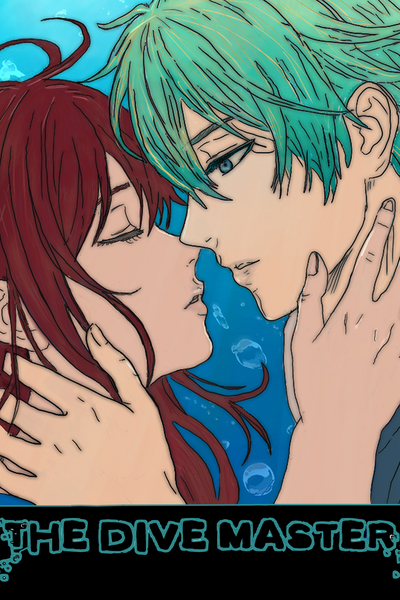
He swam up to me, close enough that our masks nearly touched. For a second, he just hung there, and I thought maybe he was about to say something, or signal me to follow. But instead, he reached out, fingers grazing the tip of one of my braids, and then slowly turned his palm over to reveal what he’d found.
It was a coin. Not shiny—dull, really—but obviously real, and old. Bronze. No. Not bronze. At closer glance. It looked impossibly heavy for its size, like it had spent decades soaking up every ounce of history in the wreck. The face was worn to a near blank, but there were still traces of the original markings. I tried to read them, but the etching was faint, and the moment felt too intimate to ruin with squinting.
He placed it in my glove, closing my fingers around it with a deliberate gentleness. Even through the neoprene, I could feel it—the specific, dense weight of metal, and beneath that, warmth, which made no sense given how long we’d both been in the water. The weight of the coin was real, but it was the warmth that got me.
I tried to hand it back. He didn’t take it. I looked at him, questions spinning in my head. He just gave me the smallest shrug, like, “what can you do?” and then tapped the coin, tapped his own chest, and pointed at me.
I laughed, a bubble of sound that shot straight for the surface. This guy was crazy. Then, because I couldn’t help it, I reached out and squeezed his wrist, just once. The look he gave me—surprised, then pleased, then suddenly serious—was better than any conversation I had ever had.




Comments (0)
See all