
Author’s Note
This chronicle is written slowly, like history itself.
If you find something here that resonates with you, a Like or a comment helps this story reach other readers. Tapas uses those small signals to decide what deserves to be seen.
Whether you choose to interact or simply read in silence, thank you for opening this book.
Frederick died in silence.
There were no trumpets, no signs in the sky, no divine bolt splitting the earth as the preachers had promised. He died the way tired men die: his body spent, his eyes open, fixed on something none of us could see.
He was wearing the habit of a Cistercian monk when he breathed his last. I still remember how strange it felt. The man they had called emperor, heretic, sage, and Antichrist, wrapped in the same rough cloth worn by those who turn their backs on the world. Perhaps it was his final irony. Perhaps his last prayer.
We buried him in Palermo, beneath the stone that guards kings. The bells rang with a hollow solemnity, as if they too were unsure of whom they were bidding farewell. When the others left, I stayed behind. Not out of duty, but because I did not know where to go after him.
This is how this chronicle begins: not with a birth, but with a grave.
I spent many winters at the side of Frederick of Hohenstaufen. I was his friend when he was a child, his witness when he became king, his chancellor when he was emperor, and his shadow when the world began to close in on him. I saw him laugh like a boy escaping his tutors, and I saw him fall silent like a man who understands, too late, the cost of power. I write now, shut away among stone walls and ancient psalms, because I fear his story will be told by others… and that those others will lie.
This book is neither a defense nor an accusation. It is memory.
I write it for his son, Conrad, if he is still alive when these pages come to an end.
I write it for the House of Hohenstaufen, so that no one may say it was forgotten.
And I write it for myself, because memories grow heavier when they remain unspoken.
There is an older book than this one. I have never seen it whole, only fragments, broken quotations, words copied by trembling hands. It speaks of the origin of the House, of its rise from the Swabian mountains, of the eagle that flew too close to the sun. It also speaks of a curse. Not as peasants understand such things, with demons and fire, but as scholars do: a warning written before anyone could hope to escape it.
“God will grant the lineage a prodigious son,
and through him the world will be shaken.
But when wonder reaches its height,
the blood will fade,
and the name will turn to dust.”
For years I mocked those words. Frederick did as well. He believed in God more deeply than many who claimed to speak in His name. He believed with an open mind, with questions, with a hunger for meaning. Perhaps that is why he was hated. Perhaps that is why he was chosen.
Now, as I write, the seasons pass without asking leave. In winter, the ink thickens. My hands are no longer those of the young man who once rode beside the King of Sicily. News arrives less often, and when it does, it brings new names and old funerals. Time, like the Church, waits for no one.
This chronicle will begin where everything began:
with the House,
with the prophecy,
and with the birth of a child on a day that should not have mattered…
but did.
If these pages have survived, if someone reads them when I no longer breathe, let this be known: Frederick II was neither a myth nor a monster. He was a man ahead of his century, and for that reason, condemned to carry the weight of all of them.
I called him friend.
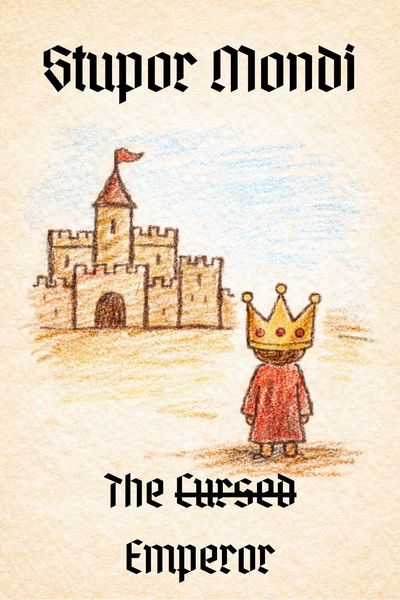
The world called him Stupor Mundi.
And now, may God judge what we never learned to understand.




Comments (3)
See all