
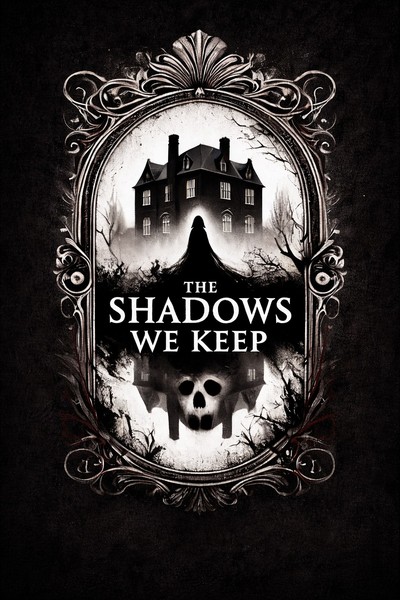
THE SHADOWS WE KEEP - BOOK 1
Chapter 0: The Underground Wing—Part 1
Descending beneath the museum, the sound of voices is thinning but never disappearing. Evelyn is counting her steps.
Stone replaces glass. Light thins. Sound learns restraint.
Above ground, the museum is showcasing history and tradition, guided tours, and controlled lighting. Below, it the ancient world is studied, purified, and then showcased above. The underground wing hums quietly with work: rolling carts, low conversations, and the soft chime of security locks disengaging and reengaging. Scholars move with purpose here, greeting one another without ceremony, united by deadlines rather than awe.
Below, the museum keeps what cannot yet be named. The underground wing does not invite curiosity; it tolerates it. Keys are required. So is silence.
Evelyn is carrying her bag on her shoulder, a thin folder under one arm, and a small recorder in the other hand, her footsteps measured, her breathing controlled. The air here smells of old limestone and preserved dust—not decay, exactly, but age undisturbed, history before interpretation.
Unlocking the final door, she enters the script division. The script division occupies the deepest level, its architecture deliberately anachronistic—stone corridors reinforced with modern steel, vaulted ceilings left exposed out of respect rather than necessity. It resembles an old European archive more than a laboratory, and that is intentional. Language behaves better when it is not rushed.
Evelyn is not the first person called.
She is the last.
She is stepping into controlled activity.
The room is narrow and long, lined with stone shelves reinforced by steel. Artifacts rest inside sealed glass cases, tagged, catalogued, and temporarily mute. Nothing here is displayed. Nothing here is beautiful on purpose. This is where objects wait to be understood before they are allowed to exist publicly.
Three desks are occupied. Screens glow with layered scans. A whiteboard is crowded with transliterations, crossed-out hypotheses, and dates spanning centuries. Dr. Kamau is pacing slowly, hands clasped behind his back. Miriam is seated cross-legged on her chair, stylus moving rapidly across her tablet. Jonas is arguing quietly with a reference index projected midair.
They look up when Evelyn enters.
Not with relief.
With confidence.
“Good,” Miriam is saying, pushing herself upright. “You’re here.”
Evelyn is setting her bag down without asking questions, already slipping into gloves. “How long has it been resisting you?”
Jonas exhales a sharp laugh. “Six hours. And that’s us being polite.”
Dr. Kamau is gesturing toward the central table. “The field team brought it in at dawn. Stone fragment. No provenance listed beyond regional recovery. We assumed early ritual text.”
“We were wrong,” Miriam adds. “Or at least incomplete.”
Evelyn moves closer as the sealed case is unlocked, her attention narrowing not because she doubts them but because she trusts them enough to know this is serious. Opening the case, she meets the stone—dark, coarse, and unpolished. A fragment, not large, but heavy with intention. Its surface is marked by shallow incisions, deliberate but restrained, as though whoever carved them understood the danger of excess.
The stone rests under the light, but it is dark and unpolished, and so it is intentionally.
She is listening as they brief her, voices overlapping slightly as excitement bleeds into frustration.
“The script isn’t symbolic,” Jonas says. “It behaves grammatically.”
“But it refuses standard classification,” Miriam adds. “It borrows structure without belonging to any family.”
“We’ve tried phonetic mapping,” Dr. Kamau continues.
“Semantic layering. Even comparative ritual dialects, but nothing holds.”
Evelyn nods, eyes already working, not interrupting. Respect here is not verbal; it is procedural. They have done their work thoroughly, and she knows that.
Evelyn leans closer, adjusting the light. The room becomes silent. Not because she demands it—but because everyone wants to see where she will look first. She is not touching the stone. She is studying spacing with depth and intent.
The script is not decorative; it is the first thing she notices. It is functional, phonetic, and built to be spoken, not admired.
The language is old—older than most preserved dialects—but the structure is precise. Clauses are nested within clauses. Commands softened into invocations. The kind of writing meant to be read aloud by someone who knows what they are doing.
Her pulse is steady. Her mind is not.
“This wasn’t written to be seen all at once,” she says finally.
“It was written to be activated in sequence.”
Miriam’s eyes widen slightly. “That would explain—”
“The resistance,” Evelyn finishes. “You’re reading it like text; it wants to be spoken.”
They are moving together now—pulling volumes from shelves, opening sealed drawers, stacking reference tomes across the table. Ancient linguistics. Marginal dialects. Forbidden lexicons accessed only with dual authorization. No one questions the escalation. The artifact has earned it.
Hours compress.
Evelyn is speaking softly as she works, not lecturing, but inviting.
“This clause isn’t descriptive,” she says, marking a projection. “It’s conditional.”
Jonas frowns. “Conditional on what?”
“Location,” she replies.
Dr. Kamau is already adjusting parameters. “Geographic invocation?”
“Yes. But not naming the place directly. Assuming familiarity.”
They are piecing it together collectively—syllable by syllable, breath by breath. When the structure finally reveals itself, the room does not celebrate.
It stills.
Because the final line does not translate, it recognizes.
Evelyn further notices a deviation—a private variant embedded along the edge of the fragment. Her breath pauses, not sharply, but carefully.
She straightens slightly, the air shifting around her as though the room itself is listening. That mark should not exist in any known catalog. It is not part of the standardized lexicon. It belongs to a private variation, a marginal form used only in texts meant to be concealed.
She has seen that form before. She does not say where. Not in the archives, but in memory. The recognition is quiet but immediate, like a door closing somewhere behind her.
She turns the stone fragment slowly, revealing a secondary line etched along its edge. Smaller, almost apologetic. Words compressed to avoid notice.
Her lips part before she realizes it, breath catching on a syllable she has not spoken in years.






Comments (0)
See all