
When you don’t really know what to expect, all you have are high hopes and that belief in the dream. India clearly offers so much to so many people that I’m not sure I fit into the demographic very well.
Like all our previous trips to Africa together, this one turned into a bit of a bird-hunt. I’d often be bound to say that I hate this, but as should be well known, what I actually hate is the waiting around hoping for a sighting and this doesn’t just apply to looking for birds.
Let us start with the birds first. We saw a little over 300 species in less than four weeks. That’s pretty good by any account and both Fred and Chris saw many that they had never seen before – this is a great thing for someone like Chris who has seen over 4000 species in his lifetime. As for me, I thought that they were spectacular. I’d always thought of magpies as those curious monochromatic things and, while those same Eurasian ones are here in India as well, some of the others are truly spectacular.

What I found most gratifying was to see birds that I should really have already on the list, as they are fairly readily seen at home. So, I’m delighted to add common kingfisher and red-billed chough to my list. With a little analysis, it’s easy to see that I’ve added as many as 250 to my personal list which must now be approaching 1000 species. Bloody good job I’m not a birder!
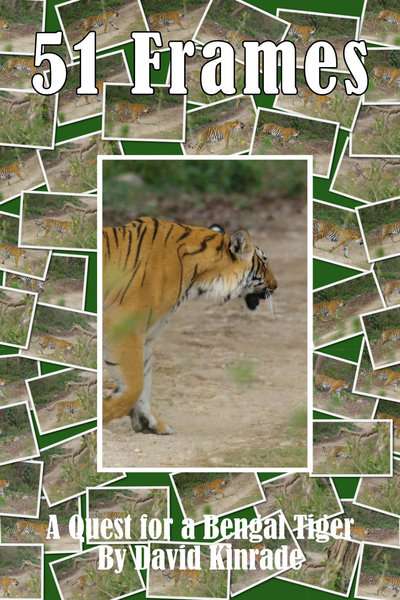
But, of course, what really brings me to India is the chance to see mammals and, in particular, some of the cats. In that regard, this trip has very much been a mixed bag for us all. As I hope this book makes very clear, seeing a tiger was – and still is – one of my most emotional wildlife moments ever. Seeing a total of four different ones and finally getting a few good photos is all I need for the trip to be considered a resounding success.
Second, are the failures. Both the snow leopard and Pallas’s cat have to be considered failures, as I didn’t get a photograph of either. You do, however, have to consider just how hard they are to see and the circumstances of our time in Ladakh.
Finally, there are the unexpected wins. Our momentary sighting of a jungle cat, running across the road and then being visible in the long grass in Dhikala was almost as good as seeing a tiger. There was little chance to get a photo and I’m happy to let a sighting be enough. Seeing a sloth bear was wonderful. I’ve never seen a bear of any sort and this one is considered hard to see anywhere. Even JP, our stalwart guide was delighted with the sighting. Then there were the yellow-throated martens who came to raid the bird-feeding station at Sattal. Their proximity and lack of fear made them formidable photography targets and I’m delighted to have added them to my list.
Beyond the wildlife, there are the people and the places, the food and the culture. I have to admit that we didn’t really delve into the culture very much, beyond our obligatory trip to Agra to see the fort and the Taj Mahal. I’m pleased to say that I’m glad that I went, even if the crowds quickly proved to be a little much for me. Still, a couple of nice photographs that I can say are my own.

All the people who we had any dealings with were uniformly helpful and friendly, but even those dealing with tourist on a daily basis can have very variable English. Outsiders like myself just assume that in a country of so many languages where English is used as a lingua-franca, knowledge and ability would be widely good. It is not. We could always make ourselves mutually understood, but it did take a little effort at times.
The varied scenery, an inevitable consequence of such a long and varied journey, was the highlight of my time in the sub-continent. From the openness of the Gangetic plains, through the river valleys and steep hills of Corbett National Park and then on into the foothills of the Himalayas, each location was more impressive than the last. Spending time at Manila and then catching a misty glimpse of Nanda Devi would have been enough for me if it was not for Ladakh.
I may not have seen my target wildlife in the high mountain valleys of the Indus, but it really didn’t matter because I was surrounded by endless vistas of the high Himalaya and the Karakoram. Clear blue skies and endless snow-capped peaks brought with them the opportunity to take thousands of wonderful photographs.
Winter conditions made our visit there a hard and testing one, but it was worth the shortness of breath and difficulty eating and sleeping to have experienced such scenes of wonder.

Food was something I had been looking forward to for some time – who doesn’t like a good curry. Real life isn’t quite as enjoyable as it might have been. In the two or three high-class lodges we stayed at, the food was excellent; varied and flavourful. Elsewhere, I was quickly overwhelmed by the sameness of it all and the unexpected lack of spicing and flavour. Maybe this is more to do with using relatively inexpensive home-stays and smaller hotels.
As discussed, only one of the places was so bad that we would have left if we had a choice. At least it was for only one night.
So, in this final analysis of India 2025, I’m going to sound so much like Fred has always sounded. I really liked it, but I don’t think I’m ever going back.









Comments (0)
See all