
Chapter 2
The Colonel glanced around the burning remnants of the village. He shook his head at what was expected of him. This wasn’t why he’d joined the army fifteen years earlier. He’d joined it to protect the people from their enemies, both foreign and domestic.
But now, there was another enemy. One he couldn’t have imagined. It was microscopic, relentless, and even deadlier than the men who wanted to rule the country with impunity. And those bastards were extremely deadly.
One of his men came up to him. “Sir, we have fresh footprints that lead into the jungle.”
The Colonel didn’t want to go into the jungle. He wanted to go home. The smoke of the burning village made him cough. But if the footprints were fresh, whoever it was had been exposed to the sickness. It was someone who needed to be shot and burned. “Show me.”
He followed his man down one dirt road and then on to another. They went all the way down the second road to the end of the village where it broke off into a path that lead into the jungle.
The Colonel squatted down and looked at the tracks. Yes, they were fresh. That a woman or a large boy needed to be hunted was not in doubt, only who it was and how long it would take to catch him or her. “Bring me a map and our four best men.”
“Yes, sir,” the soldier snapped off a salute and ran off to get what he was ordered.
The Colonel knew there was a jungle with a savanna and another jungle between here and the outskirts of the capital. If whoever he was after made it to Jelani, there would be nothing he could do about it afterwards.
Wiping out a village of a few hundred people, most of whom were already dead and dying, was one thing. But the capital? One with white doctors in in it? No, that was an invitation to some sort of United Nations show-trial about violating human rights or some other damned thing.
His commanders would have to understand he only had so many resources for such a wide surface area. If they had been so concerned about stopping the sickness, they should have told him about it sooner or given him more men. Probably both. But if he couldn’t find whoever he was about to go after, he had to find a more diplomatic way of expressing himself. Otherwise, his career would--
“Colonel, we’re under attack!” yelled the soldier he’d sent away a few moments earlier and who was now running back toward him.
“In the village? By who?”
“Not the village. Dubaku has taken Otieno.”
Dubaku was a warlord. Otieno was the country’s second biggest city and more than two hundred miles away. By the time The Colonel reached his army base, it would be dark. Before he and whatever heavy infantry reached Otieno, it would be dark again. He would have to attack at first light on the next day.
The Colonel looked back at the trail and thought about his original mission. He’d seen with his own eyes what the sickness did to people. It had to be stopped. But what good would it do if the one in charge of the country was a warlord. None. None at all.
The Colonel saw the soldier looking at him, waiting to receive his orders. “Take two men with you in the jungle, find whoever escaped, and kill them. Then, go into Jelani, commandeer a vehicle, and go back to the base.”
“Yes, sir.” The soldier snapped off a salute and ran off to find two men.
The Colonel watched him leave. He thought back to how contagious whoever had escaped would be. Maybe he or she had a natural immunity and they could be used to make a vaccine. Maybe… he stopped himself. If the jungle didn’t kill whoever it was, his men would. Unless the person made it to another village and infected everyone there. Or made it to Jelani and infected even more. He shook his head. No matter what happened, it would be bad.
He exhaled and started walking toward the still smoldering village. The jungle and whoever was beyond were no longer his problem. No, his problem was much bigger. How was he going to invade the second largest city in his country two dawns from now and take it from the rebels who had just seized it while at the same time, leave as much of it standing as possible. Compared to his new mission, burning down some villages didn’t seem so hard.
☣
Nyah’s feet were killing her. She had cramps in her legs, back, and hands. She’d suffered through three separate clusters of hunger pains. When she had stopped to pee four hours earlier, her urine had been a dark yellow signifying she was dehydrated on top of everything else. Still, she pressed on.
An hour ago, she’d seen the city’s lights standing out against the backdrop of the night sky.
Nyah was now making her way through the streets. Streets paved with concrete. She still had the branch in her hands. The branch was why her hands had been cramping. But the branch had saved her life. She would not throw it away just because it made her look crazy. Besides, if people thought she was crazy, they would be less likely to bother her.
She looked up the street and saw a sign she recognized from all the times she and her family had been to the mobile clinics in and around her village. The angel inside the Y-shape of a stethoscope. As exhausted as she was, Nyah walked a little faster.
She reached the building’s front door. There was a guard there. He eyed her warily, specifically her branch/spear.
He said. “You can’t come in here with that.”
“I need it for protection,” Nyah said.
“Protection from who?”
“The army.”
“The army isn’t in here.”
Nyah looked around. “Where can I put this so no one steals it?”
He shrugged his shoulders. “Anywhere.”
She went to the curb and set it down just inside the street. She turned back to the guard. “Please, make sure no one takes my spear.”
“This is no place for spears.”
It’s probably no place for knives, she thought to herself, but there was no way she would give that up. Back in the jungle, she had tied the cut ends of her drawstring together, then put her dress on inside out so she could keep the knife against her without anyone seeing it.
Nyah put her red, raw, hands up in surrender and said, “May I come in now, please?”
He turned the doorknob and pulled the door open. He held it for her and said, “Welcome.”
Nyah went in. There was a short hallway, after that, an empty doorway that spilled out into a larger room. Beds were lined up on both sides of the room, six feet apart. The beds were full.
A female doctor in a white lab coat turned and saw Nyah. “Can I help you?” she said in English.
Nyah couldn’t understand her. “Please, I need help,” she said in her native tongue.
“Do you speak French?” the doctor asked in French.
Nyah still couldn’t understand her. She couldn’t believe after everything she’d been through to make it all the way into the building, a language barrier would stop her from getting the help she needed. A damn language barrier in her own country!
The doctor saw the look on the woman’s face. It was the international expression of helplessness and frustration. The doctor held up one finger, which in her culture meant hang on a minute, turned her head, and said, “Awiti.”
Nyah recognized the local name immediately. She even had a cousin named Awiti. It wouldn’t be her who showed up, of course, but at least they had someone here she could talk to.
A dark-skinned girl a few years younger than Nyah came from further up the room. “Yes, Dr. Jones?” she said in English.
“I need you to translate,” Dr. Jones said.
Awiti turned to Nyah and asked. “What do you need help with?”
Nyah started talking. She started crying after a few seconds but she kept talking. She told them everything: about the sickness, about her family, about the village, about the army, even about the lioness.
Dr. Cynthia Jones stood there and listened. It bothered her that she still couldn’t understand more than a few phrases even after six weeks in the country. But as Awiti kept translating, she understood everything.
When Awiti finished translating Nyah’s last word, Dr. Jones was quiet. She was positive there couldn’t be two diseases with the same symptoms this close together in one small geographic area.
“Come with me,” Dr. Jones said.
☣
The three women stood in front of a door in the basement. Dr. Jones stuck a key in the lock and unlocked the door. She went in and held the door open for Nyah and Awiti.
Inside, the room was split in three parts. The first third was the regular room. The second was a sort of chamber. It had a blower on one side that blew cold air onto whoever was standing in front of it. The third part had a bed with the dead body of a black man in it. Dried blood was crusted out of his nose and ears.
“He came in five nights ago. We brought him down here so no one would see him,” Jones said. She turned to Nyah. “Is that what the people who died in your village looked like?”
Awiti translated.
Nyah nodded her head.
“Is it contagious?” Awiti asked.
Jones said, “As far as I can tell, it’s transmitted by bodily fluids. Blood, sweat, saliva, along with semen and vaginal fluids.”
“Can we catch it?”
“No, not from here. We’ll take the body and seal it in a special body bag. After dark, we’ll move it outside and take it somewhere it can be burned.”
Awiti asked, “How many are infected?”
“That’s impossible to say.”
“And there is no cure?”
Jones glanced at Nyah for a second then looked back to Awiti. “Not yet.”
☣
Dr. Cynthia Jones looked into the microscope. She was examining a group of cells from the man who had bled to death out of every orifice. It had taken him about three and a half days. The first day, he seemed to be in a lot of pain. After that, he slipped in and out of consciousness until his death.
There was no doubt in her mind the disease she was looking at was another variation of Ebola and that it was probably a mutation of the previous version she had studied. There was also the possibility that this was an entirely new strain that had never been seen before because so many people who had Ebola died before they could get any kind of proper medical attention.
The truth was, considering the approximately ninety percent fatality rate, there wasn’t much modern medicine could do even if they did manage to get got to the infected in time. The rate at which the disease’s cells annihilated the healthy cells was both impressive and terrifying. It easily explained how the mortality rate was so astronomical and also why the incubation period was so short. As soon as the disease latched on, it took off at a dead sprint on its mission to destroy.
The short incubation period was also the reason why Ebola hadn’t spread out more and killed more people. The infected victims showed symptoms and would almost always die before they could spread it to anyone.
The way it did spread was when someone, a caretaker, touched the fluids of an infected person, usually sweat or saliva from a handkerchief, if the caretaker had an open wound or shared a cup or an eating utensil perhaps, they would catch the disease and the cycle would start all over again.
It was ironic that if Ebola could just somehow be harnessed and made slightly less fatal, it could actually kill exponentially more people overall. At the same time, if there was more clean running water with which to wash bowls, cups, or eating utensils, the amount of Ebola deaths would shrink. Then again, the lack of clean drinking water killed astronomically more people in one year than the big, bad, disease of Ebola had in all of the years of recorded history put together.
Jones went to a second microscope and looked through the eyepiece.
In the previous slide, the Ebola cells absorbed themselves into the body’s healthy cells and then multiplied inside the cells over and over until the healthy cells grew, turned red, and finally burst leaving only the Ebola cells behind.
In this slide, the healthy cells didn’t absorb the foreign cells as much. When they did, the multiplications stopped after three cell divisions. The outer wall of the healthy cells didn’t break.
Limiting the multiplications and maintaining the integrity of the original healthy cell’s wall was literally the difference between life and death.
Jones had seen enough. It was obvious that the young woman named Nyah had a genetic mutation that left her immune system able to fight off this particular kind of Ebola.
While it would be interesting to see if her immune system was superior against any and all strains of the disease or just this one, Jones had a much more important job to do first.
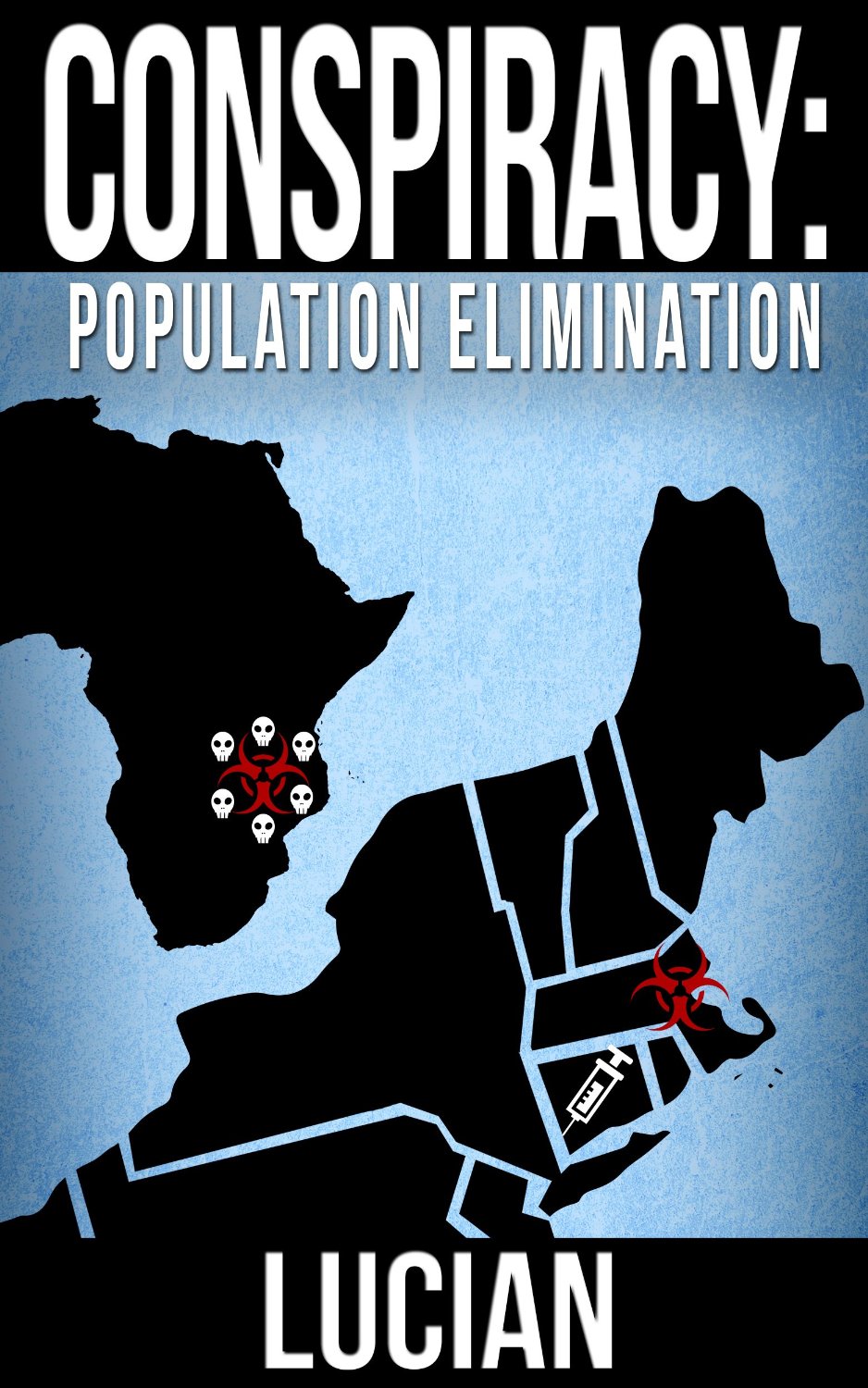
She had to call the leader of a secret organization whose objective was to reduce the planet’s population from about seven and a half billion people to around five hundred million and tell him she had found a way for them to accomplish their goal.






Comments (0)
See all