
The Wolf Parts 1-3 Illustrations and Lore
These chapters are the first direct encounter we have with the threat from beyond the rifts that Erik and Ianthe both defend the continent from in different ways. Rather than talking about the terrors of an incursion indirectly, Ianthe has now looked one of symptoms of these fissures in their reality in the eye.
I hope it's explained well enough in the chapters themselves and without being too dense, but here is a brief summary of what a corrupted beast is, and how exactly they differ from demonic beasts that come from within the rifts. As for the rifts and incursions themselves, that lore is going to have to wait a bit longer.
Demonic Beast / Demons
Demonic beasts are creatures from the other side of the rift. For some reason, demonic creatures are attracted to the human world but seem incompatible. Once they arrive, they get more and more agitated, attacking anything and everything. No signs of language or coordinated movements or strategy have been observed when they appear; instead, they behave like a group of crazed individual beings.
After a few days outside a rift, if they manage to survive encounters with the humans and animals they attack, demonic beasts eventually burn out, leaving toxic scars on the earth where they died. The longer they are outside the rift, the more damaged their features become, as if the very air and environment wounds them the longer they are exposed. Fighting them is dangerous not only because of their strength but also because their blood and flesh are corrosive to earthly beings in much the same way.
No one has ever gone the opposite direction into the rift.
Corrupted Beast
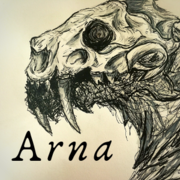
Corrupted beasts are animals who are exposed to too much energy from the rifts, although exactly how that occurs is not understood. There are no records of anyone witnessing a transformation of a normal animal into a corrupted beast, not even during an active incursion, or among any of the horses who have been exposed repeatedly to demonic energy while defending at a rift, so there are some who believe that corrupted beasts are actually just different types of demonic beasts that originate beyond the rifts. However, since they look so much more like earthly creatures, this is a minority interpretation of the observations. Exactly what the corruption process involves - how long it takes, what exact exposure leads to corruption, and what makes some animals susceptible but not others - is largely a mystery.
Regardless of this, corrupted beasts are consistently found near old incursion sites, usually a few weeks later, and they behave similarly to demonic beasts. They are agressive to the point of their own destruction and target uncorrupted earthly animals rather than other demonic or corrupted beasts. Usually they end up killed in their reckless attacks, but if they aren't they eventually starve, too focused on slaughter to keep themselves fed. Unlike demonic beasts, they are not harmed by their environment, although their blood is toxic and corrosive to earthly creatures in a similar but much milder way.
Compared to their normal animal counterparts, corrupted animals are often slightly twisted anatomically with elongated features, and they are always much larger. The wolves that attacked the Second Order in the last episodes are extreme examples of this enlargment, but they are also among the least terrifying of the beasts out there because they still mostly resemble wolves. Generally, corrupted beasts are more disturbing in their distortions from familiar animals, sometimes even with extra or atrophied limbs and almost humanoid distortions to their faces.
Only some types of animals have been observed in corrupted forms, further complicating scholars' and knights' understanding of their origins. Mostly predators have been observed - wildcats, wolves, birds of prey, and even spiders - but wild boar, deer, moose, and elk are also known in corrupted forms. Despite that, domesticated animals like dogs, cats, cows, horses and even stray or feral cases have never been observed in corrupted form. Neither have humans.

A corrupted wolf beast
The Wolf chapters are also the first time that the structure and organization of the Second Order has become important. A lot of those details are referenced in Part 2 from Erik's perspective. Here's a quick overview of the order's positions, how the order is usually split when forced to divide into groups as they were when Ianthe first started traveling with them, and how the unit functions in the case of attack, defense, and regular travel.
The Second Order
The Second Order is organized in a way unique to the duchy rather than analagously to imperial troops. The active company is comprised of sixty knights, including one captain, one vice captain, and and 4 senior (senior by skill and promotion status, not age or even experience) knights including the direct aide to the captain. No squires or trainees are included in the active company, instead staying in the center of the Duchy.
Within the company, twelve knights are assigned as scouts and three as official medics. They are specifically trained for these assignments for years in addition to their regular training. All the official medics are regular rank knights and cannot serve as both a senior knight and an official medic simultaneously. In the event of any emergency or attack they are responsible for managing all medical responses - every knight has at least some minimum field medicine training, and they all defer to the fully trained medics. In contrast, the head scout, Miro, is one of the senior knights, but he only has direct command over the scouts. As is mentioned in The Wolf Part 2, three scouts actively circle a wide oval perimeter around the main force whenever the full company is traveling. These three active scout assignments are rotated among the full dozen scouts two-three times per day while on the road so as to ensure the active scouts are fresh and can move quickly.
Any of other three senior knights is qualified to lead contingents of the company in the event it is required, such as when the Second Order split into three earlier in Arc 1 with one led by the captain, the other the vice-captain, and one by Elias (one of the senior knights and officially third-in-command by virtue of his position as Erik's aide.)
The Politics of the Second Order and the Oesten Duchy
Back in the duchy, about a dozen knights who have already served on the active company work to train new knights. The exact number varies. Some knights retire completely rather than continuing to work with trainees. Often knights are forced out of the active company because of severe injury that makes it hard to continue work of any kind, even more administrative positions. As for trainees, there are always many, often over two hundred. Very few are ever promoted to active knights, and those who aren't usually serve in other orders, while others simply leave after a few years of training and return to their former civilian lives, now with bit more respectability.
The cultural dynamics and socioeconomic composition of the Second Order and espeically the trainees varies drastically depending on the leadership of the order, of the duchy, and of the empire. Much as Augusta explained, the politics of having a noble families child enter the service shiffts depending on the severity and regularity of incursions as well as the shifting power dynamics between the duchy and the imperial family. Historically, when the support from the imperial company's was stronger, there was more prestige and less danger involved in serving in the Second Company. That said, the duchy has always had a much more independent identity than most other parts of the Empire, and the danger that the Second Company faces as they defend the frequent rifts along the Great Divide at the Western border contributes to that sense of pride.
Perhaps most importantly, the Great Divide has become more and more dangerous. The Second Order has fewer trainees than ever, ninety-three and dropping rapidly. Nobles are less and less willing to send their children to the front lines because of the higher casualties and also because the animosity from the crown towards the Second Order in particular has grown. Whereas before the Duchy was more or less a unified political entity against the Imperial power, Erik's brother has allied himself with Prince Adar, bringing the politics of Imperial and Ducal succession to the forefront. While the people of the Oesten Duchy still have a great deal of shared cultural identity and pride in the Second Order's defense of the Great Divide, the aristocracy has been drawn into this power struggle. Since Erik, the illegitimate and undersupported son of the Duke of Oesten, leads the Second Order, the political benefit of serving in or even just supporting the Second Order financially has all but vanished.
Thus, as counterintitutive as it might be, the majority of the aristocracy throughout the Empire and even within the Oesten Duchy will not support greater resources for the Second Order and the defense against demonic incursions even as the death toll rises. Erik's desperation when he came to the Temple is largely because of this reality.
As for how exactly the Temple factors into all this, I'll leave that for another day.

Augusta in action with her dhálann






Comments (0)
See all