
I was late for class on the day I first met her. And being myself, I never bother to read the program in advance, so I had no idea what the day's lecture would be. Maybe that’s why my first impression of her was so different from my colleagues’.
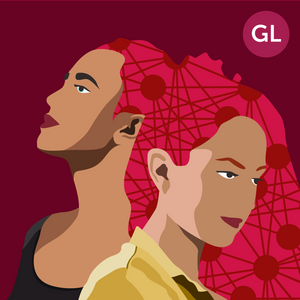
She was standing next to the teacher’s desk, wearing a black blazer which accentuated her very red hair. Her dark eyes and thin mouth, so very different from mine, had my attention from the moment I walked into the room. She looked no older than any of us, maybe even younger. She couldn’t be a teacher already, could she? Maybe she was a transfer student? Wasn’t it a bit old fashioned to have students present themselves in front of class?
“Good morning, miss Oliveira,” said the teacher, an old man whose name I now fail to remember. “You’ve kept us waiting again, today.”
“Sorry,” I muttered, before sinking into my seat.
I looked at that stranger girl again. Her eyes met mine. She gave me a soft smile.
Abigail, my friend who sat next to me in class, caught me staring at the redhead woman. She touched my shoulder and pointed at something she’d written on the edge of a notebook page.
“Interested?”
As usual, Abby could read me like a book. I stifled a laugh, nodded, then I picked up her pen and wrote a reply on her notebook:
“Who is she?”
Abby’s jaw dropped.
“Don’t you read the news? She’s famous,” she wrote back.
I shook my head. Abby giggled.
“I’ll let you figure it out, then,” was what she wrote last. And for the remainder of the class, she did not say another word to me about that matter.
I opened my notebook and started taking notes.
The teacher was talking about law project 93/70. I knew that one. It involved human connectome systems, known as replicas. I had to know that much: it was what my father had been working on before he died. It was a widely debated topic in CS and Law classes equally. I didn't like hearing about it. It reminded me of my father. Of the way he died. Had I known this would be the topic of today’s lecture, I’d probably have skipped it.
“And now,” said the teacher, “with that in mind, I invite our guest, Professor Helena Norwood, to tell us more about the law changes and what it implies to us as a society.”
The man handed her the microphone. Professor Helena? You’ve gotta be kidding me, right? I mean, that girl looked like she was still in her teens, how was she a professor already?
“Thank you, Mr. Jones,” she said. Right! That was the name of the man. And oh, boy, her voice was so cute. Is she gay? I hope she’s gay.
She glanced my way one last time before turning back to the rest of the students and saying:
“Twelve years ago, the first human replica was built. You all know him as T. P., an eight-year old boy who died of leukemia. His entire brain was mapped and reproduced as a neural network running inside a shell body adapted from ape connectome projects. After he woke up, he was sent to live with T. P.’s family for a week. Predictably, there were errors in his assembly, and once those errors were detected, the engineers responsible for the project had T. P. shut down for maintenance.
“And here's where things start getting ugly. The engineers never bothered to preserve the data from that one-week experience. They got T.P. running again from the original connectome. Everything that happened during that first week was gone. His family was shocked. They rejected T.P. This android, they realized, didn't actually have their child's soul.
“All of you probably have already heard this story before. What you don’t know, is what happened to T. P. after the fact.”
“Hasn’t he been recalled?” one of the other students asked.
“That’s what usually happens when a family rejects a replica, yes,” said the redhead woman. “But that was not what happened to him. Replica T. P. was taken back to the laboratory that had originally built him, and because he was the first, they decided to not disassemble him, but to keep him going for further studies.
“For years, T. P. was asked all those pesky questions that humans generally ask themselves. Who are you? What is life? Do you think there is a life after death? And because T. P. was only eight at the time his connectome was built, he couldn’t completely grasp the fact that he was not exactly the same T. P. who had died from leukemia, or that he was not organic, but replica. So the answers he gave the scientists them were as lively as one could expect from an eight year old. Because replicas, running a neural network that is identical to one belonging to an organic human, behave exactly as humans would. Think as humans would. Feel what humans feel.
“I believe every person in this room can relate to the experience of being an observer to the world. Something else that exists apart from the body, a ghost in the machine. That feeling is nothing but the product of chemical activity of neurons in your brain. What I’m here to tell you, today, is that this very feeling is also felt by every single replica I’ve come in contact with. An organic human is only alive while their brain is chemically active. A replica, by inference, is only alive while their virtual neural network is running. Shut down either network, organic or virtual, and the individual dies. So why is it that society is so against murdering an organic, but has no issue with shutting down a replica?”
Professor Helena Norwood continued on the topic for a while longer. She then began to talk about the law project and what it entailed. It piqued my interest. The topic she was telling us about was something I had already come in contact with several times before, always because of my father. This time, however, it did not hurt me so much to hear it. Perhaps because Helena sounded so much like dad, I actually felt a bit of warmth inside, as if he were there telling me those things instead of the Professor.
Class ended with a round of applause. I found myself so lost in thought that before long, I was the only student left in the room. I snapped back to reality and started to pack my stuff.
“Miss Lucia Oliveira, right?”
I heard Professor Helena’s voice and turned to look at her.
“Oh, um, hi,” was all I managed to say. She was even more stunning from up close.
“Are you perhaps acquainted with Giuseppe Oliveira, the researcher?”
I nodded. “He was my father.”
Helena smiled. “You look a lot like him. I’m sorry for your loss.”
I nodded again. At this point, I had already trained myself to reply to comments like these with a generic “thank you, he was a very important person to us,” but I found that I couldn’t say anything superficial like that when Helena was around. Her presence was unsettling.
“I miss him,” was what I managed to say.
“I miss him too,” said Helena.
That stunned me for a moment.
“You... knew him?” I asked her, surprised.
Helena nodded. “Well, he made me,” she said. “I guess we have that in common.”
After that, she left the room, leaving me alone to ponder in silence the meaning of her words.

![[Dropped] What makes you you ~ GL](https://us-a.tapas.io/sa/1b/e3a7c1ff-6a96-4108-8eec-bb6b3abdfb2d.png)

Comments (6)
See all